
Similes are powerful tools in the English language, allowing us to paint vivid pictures with words by comparing one thing to another. When used to describe food, similes can elevate our writing from simple descriptions to mouthwatering masterpieces.
Understanding how to effectively use similes for food enhances your descriptive writing skills and adds depth to your communication. This guide will help you master the art of crafting delectable similes, suitable for food reviews, creative writing, or everyday conversation.
Whether you’re a student, a food blogger, or simply someone who enjoys playing with language, this article will provide you with the knowledge and practice you need to create similes that are as satisfying as a perfect bite.
Off to College Deals

Save up to 30% on everything you need for the semester.
Contains affiliate link
Table of Contents
- Definition of Simile
- Structural Breakdown of Similes
- Types of Similes for Food
- Examples of Food Similes
- Usage Rules for Food Similes
- Common Mistakes with Food Similes
- Practice Exercises
- Advanced Topics in Food Similes
- Frequently Asked Questions
- Conclusion
Definition of Simile
A simile is a figure of speech that compares two unlike things using the words “like” or “as.” It is a type of figurative language that enhances writing by creating vivid imagery and making descriptions more engaging. Unlike metaphors, which directly equate two things (e.g., “He is a lion”), similes make an explicit comparison (e.g., “He is like a lion”). The primary function of a simile is to illuminate a particular quality or characteristic of the subject by relating it to something familiar or easily understood.
In the context of food, similes can be used to describe taste, texture, appearance, smell, or even the overall experience of eating. They allow writers and speakers to convey the nuances of culinary experiences in a way that is both evocative and relatable.
For example, instead of simply saying “the cake was sweet,” you could say “the cake was as sweet as honey,” creating a much more descriptive and appealing image.
Classification of Similes
Similes can be classified based on the aspect of comparison they emphasize. For food, this can include similes of taste, texture, appearance, aroma, and even the emotional response evoked by the food.
Understanding these classifications can help you choose the most effective simile for your descriptive purpose.
Young Adults & Students:
Get 6 Months of Prime for $0

Ages 18-24 unlock exclusive perks including:
Contains affiliate link
For example, a simile focusing on taste might be, “The sauce was as tangy as a lemon.” A simile focusing on texture might be, “The bread was as soft as a cloud.” A simile focusing on appearance could be, “The berries were as red as rubies.” Each type of simile appeals to a different sense, creating a multi-sensory experience for the reader or listener.
Function of Similes
The main function of similes is to enhance descriptive writing and make it more engaging for the audience. By drawing comparisons between the food and something else, similes help readers or listeners create a mental image of the food being described.
This can make the description more memorable and impactful.
Similes also allow for a more nuanced and subjective description of food. Instead of simply stating facts about the food, similes can convey the writer’s or speaker’s personal experience and emotional response.
For example, saying “The soup was as comforting as a warm hug” not only describes the soup but also conveys a sense of warmth and emotional satisfaction.
Contexts for Using Similes
Similes for food can be used in a wide variety of contexts, from formal writing to casual conversation. They are particularly useful in:
- Food Reviews: To describe the taste, texture, and appearance of dishes.
- Creative Writing: To add depth and imagery to descriptions of meals and culinary experiences.
- Recipes: To make cooking instructions more engaging and appealing.
- Advertisements: To entice consumers with mouthwatering descriptions of food products.
- Everyday Conversation: To share your culinary experiences with friends and family in a vivid and engaging way.
Structural Breakdown of Similes
The basic structure of a simile consists of three main components: the subject, the linking word (“like” or “as”), and the comparison object. Understanding these components is essential for constructing effective and grammatically correct similes.
The subject is the thing being described (in this case, the food). The linking word establishes the comparison.
The comparison object is the thing that the subject is being compared to. The comparison object should be something that the audience is familiar with and that shares a similar quality with the subject.
The Subject
The subject of a food simile is, of course, the food item you are describing. This could be anything from a single ingredient (e.g., “the lemon”) to a complex dish (e.g., “the paella”).
The clarity of your subject is crucial for the simile to be effective. Make sure the audience knows exactly what you are describing before you introduce the comparison.
Consider these examples:
- “The chocolate was as dark as night.”
- “The soup was like a warm blanket on a cold day.”
- “The steak was as tender as butter.”
The Linking Word: “Like” or “As”
The linking word is what distinguishes a simile from a metaphor. Similes use “like” or “as” to explicitly state the comparison, while metaphors imply the comparison without using these words.
The choice between “like” and “as” is often a matter of personal preference, but both are grammatically correct.
Here are some examples illustrating the use of “like” and “as”:
- “The coffee was like liquid velvet.”
- “The apple pie was as American as apple pie can be.”
- “The sauce tasted like sunshine in a jar.”
- “Her smile was as sweet as the candy.”
The Comparison Object
The comparison object is the key to a successful simile. It should be something that the audience is familiar with and that shares a relevant quality with the subject.
The more vivid and relatable the comparison object, the more effective the simile will be.
For example, comparing the sweetness of a mango to honey is effective because most people know how sweet honey is. Comparing the texture of a cake to a cloud is effective because most people have a sense of how soft and light a cloud is.
The goal is to choose comparison objects that evoke a strong and clear sensory experience.
Consider these examples:
- “The cheese was as sharp as a knife.”
- “The ice cream was like a dream on a hot day.”
- “The spices were as fragrant as a blooming garden.”
Types of Similes for Food
Similes for food can be categorized based on the sensory aspect they emphasize: taste, texture, appearance, aroma, and temperature. Understanding these categories can help you choose the most effective simile for your descriptive purpose.
Taste-Based Similes
Taste-based similes focus on the flavor of the food. They often compare the food’s taste to other familiar flavors, such as fruits, spices, or other dishes.
These similes are particularly useful for describing the specific taste qualities of a dish, such as sweetness, sourness, bitterness, or saltiness.
Examples include:
- “The lemonade was as tart as a lemon.”
- “The chocolate was like a symphony of bitterness and sweetness.”
- “The salsa was as spicy as a dragon’s breath.”
Savory Similes
Savory similes are a subset of taste-based similes, specifically focusing on non-sweet flavors. They often involve comparisons to meats, herbs, or umami-rich ingredients.
These similes are crucial for describing complex, non-sweet dishes.
Examples include:
- “The broth was as rich as beef consommé.”
- “The herbs were like a forest floor after a rain.”
- “The cheese was as pungent as old socks.”
Texture-Based Similes
Texture-based similes focus on the physical feel of the food in the mouth. They often compare the food’s texture to other familiar textures, such as silk, velvet, or sandpaper.
These similes are particularly useful for describing the mouthfeel of a dish, such as its smoothness, crunchiness, or chewiness.
Examples include:
- “The pudding was as smooth as silk.”
- “The crackers were like biting into crunchy gravel.”
- “The steak was as chewy as rubber.”
Appearance-Based Similes
Appearance-based similes focus on the visual qualities of the food. They often compare the food’s color, shape, or presentation to other visually striking objects, such as jewels, flowers, or works of art.
These similes are particularly useful for describing the aesthetic appeal of a dish.
Examples include:
- “The berries were as red as rubies.”
- “The frosting was like a swirl of clouds on a summer day.”
- “The salad was as colorful as a painter’s palette.”
Temperature-Based Similes
Temperature-based similes focus on how hot or cold the food is. They often compare the food’s temperature to other familiar sensations, such as a warm hug or an icy blast.
These similes are useful for conveying the comforting or refreshing qualities of a dish.
Examples include:
- “The soup was as warm as a mother’s embrace.”
- “The ice cream was like a refreshing plunge into a cold lake.”
- “The spices made my mouth feel like it was on fire.”
Examples of Food Similes
Here are extensive examples of food similes, organized by the categories discussed above. Each table contains a variety of similes to illustrate the different ways you can describe food using figurative language.
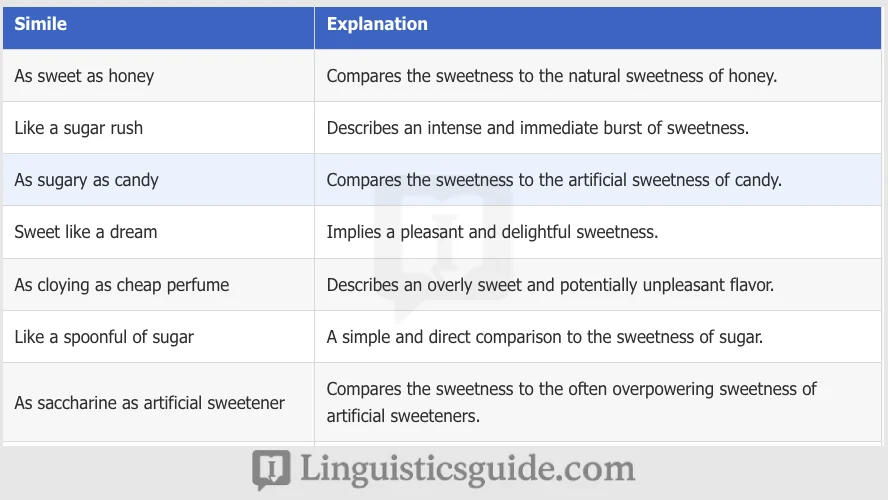
Sweet Similes
The following table provides a variety of similes to describe the sweetness of food. These examples use comparisons to familiar sweet items to create a vivid sense of the dish’s flavor.
| Simile | Explanation |
|---|---|
| As sweet as honey | Compares the sweetness to the natural sweetness of honey. |
| Like a sugar rush | Describes an intense and immediate burst of sweetness. |
| As sugary as candy | Compares the sweetness to the artificial sweetness of candy. |
| Sweet like a dream | Implies a pleasant and delightful sweetness. |
| As cloying as cheap perfume | Describes an overly sweet and potentially unpleasant flavor. |
| Like a spoonful of sugar | A simple and direct comparison to the sweetness of sugar. |
| As saccharine as artificial sweetener | Compares the sweetness to the often overpowering sweetness of artificial sweeteners. |
| Sweet like a summer’s day | Evokes a sense of warmth and pleasant sweetness. |
| As delectable as a chocolate fountain | Compares the sweetness to the indulgent experience of a chocolate fountain. |
| Like biting into a ripe peach | Describes the natural and juicy sweetness of a ripe peach. |
| As luscious as a ripe fig | Compares the sweetness to the rich and complex sweetness of a ripe fig. |
| Sweet like a child’s smile | Associates the sweetness with innocence and joy. |
| As honeyed as a baklava | Compares the sweetness to the honey-soaked pastry, baklava. |
| Like liquid sunshine | Describes a bright and cheerful sweetness. |
| As ambrosial as a mythical dessert | Connects the sweetness to the legendary food of the gods. |
| Like biting into a candied apple | Describes the crisp, sugary sweetness of a candied apple. |
| As sweet as a hummingbird’s nectar | Compares the sweetness to the food source of hummingbirds, known for its high sugar content. |
| Like a sugary syrup waterfall | Describes an overwhelming sweetness in a very descriptive way. |
| As sweet as pure molasses | Compares the sweetness to the strong, rich sweetness of molasses. |
| Like an explosion of cotton candy in your mouth | Describes the fluffy, airy sweetness of cotton candy. |
| As sweet as a lollipop | Compares the sweetness to the very sugary sweetness of a lollipop. |
| Like a bite of pure sugar | Describes a very simple and direct sweetness. |
| As sweet as maple syrup | Compares the sweetness to the distinctive taste of maple syrup. |
| Like a bite of pure bliss | Describes a delightful and pure sweetness. |
Savory Similes
This table focuses on similes that describe savory flavors. These comparisons use familiar savory items to create a sense of the dish’s taste profile, which may include salty, umami, or herbal notes.
| Simile | Explanation |
|---|---|
| As salty as the sea | Compares the saltiness to the ocean’s salinity. |
| Like a burst of umami | Describes a rich and savory flavor. |
| As savory as roasted meat | Compares the savoriness to the satisfying flavor of roasted meat. |
| Like a mouthful of herbs | Describes a fresh and aromatic savory flavor. |
| As pungent as blue cheese | Compares the pungency to the strong flavor of blue cheese. |
| Like a whisper of garlic | Describes a subtle garlic flavor. |
| As earthy as mushrooms | Compares the flavor to the earthy taste of mushrooms. |
| Like savoring aged cheese | Describes a complex and mature savory flavor. |
| As rich as bone broth | Compares the richness to the deep flavor of bone broth. |
| Like tasting the forest floor | Describes an earthy and complex savory flavor. |
| As smoky as a campfire | Compares the flavor to the smoky taste of food cooked over a campfire. |
| Like the taste of sun-dried tomatoes | Describes a concentrated and savory tomato flavor. |
| As tangy as sauerkraut | Compares the tanginess to the fermented taste of sauerkraut. |
| Like a bite of salty bacon | Describes the irresistible savory flavor of bacon. |
| As hearty as a stew | Compares the flavor to the filling and comforting taste of stew. |
| Like a taste of the earth | Describes a grounding and natural savory flavor. |
| As flavorful as a well-seasoned steak | Compares the rich flavor to a perfectly seasoned steak. |
| Like a symphony of spices | Describes a complex and well-balanced savory flavor. |
| As briny as olives | Compares the saltiness to the distinctive flavor of olives. |
| Like a rich, savory gravy | Describes a smooth and flavorful savory sauce. |
| As intense as truffle oil | Compares the strong flavor to the luxurious taste of truffle oil. |
| Like a mouthful of garden herbs | Describes a fresh and vibrant savory flavor. |
| As zesty as lemon pepper | Compares the flavor to the bright and peppery taste of lemon pepper seasoning. |
| Like a taste of the sea breeze | Describes a fresh and slightly salty savory flavor. |
| As umami-rich as seaweed | Compares the savory flavor to the umami taste of seaweed. |
Texture-Based Similes
This table provides similes focusing on the texture of food. These comparisons use familiar textures to create a vivid sense of how the food feels in the mouth.
| Simile | Explanation |
|---|---|
| As smooth as silk | Describes a very smooth and delicate texture. |
| Like biting into a cloud | Describes a soft, airy, and light texture. |
| As crunchy as gravel | Describes a very hard and brittle texture. |
| Like chewing rubber | Describes a tough and difficult-to-chew texture. |
| As creamy as velvet | Describes a rich, smooth, and luxurious texture. |
| Like sandpaper on the tongue | Describes a rough and unpleasant texture. |
| As fluffy as cotton | Describes a light and airy texture. |
| Like biting into a sponge | Describes a soft and porous texture. |
| As tender as butter | Describes a very soft and easily cut texture. |
| Like a mouthful of sawdust | Describes a dry and gritty texture. |
| As chewy as taffy | Describes a texture that requires a lot of chewing. |
| Like biting into a crispy leaf | Describes a light and crispy texture. |
| As delicate as lace | Describes a very fine and fragile texture. |
| Like eating a bowl of mush | Describes a soft and shapeless texture. |
| As firm as tofu | Describes a solid and slightly yielding texture. |
| Like biting into a tough piece of leather | Describes a very firm and chewy texture. |
| As brittle as glass | Describes a texture that shatters easily. |
| Like a velvety mousse | Describes a smooth, airy, and rich texture. |
| As grainy as sand | Describes a texture with small, distinct particles. |
| Like sinking your teeth into a pillow | Describes a soft and yielding texture. |
| As juicy as a ripe plum | Describes a texture with a lot of liquid. |
| Like biting into a firm apple | Describes a crisp and solid texture. |
| As airy as meringue | Describes a light and delicate texture. |
| Like a soft, warm blanket | Describes a comforting and yielding texture. |
| As dense as fudge | Describes a heavy and compact texture. |
Appearance-Based Similes
The following table focuses on similes describing the appearance of food. These comparisons use visually striking objects to create a vivid image of the dish’s presentation.
| Simile | Explanation |
|---|---|
| As red as rubies | Describes a deep, vibrant red color. |
| Like a swirl of clouds | Describes a soft, white, and swirling appearance. |
| As colorful as a painter’s palette | Describes a dish with a variety of bright colors. |
| Like sunshine on a plate | Describes a bright and cheerful yellow color. |
| As dark as night | Describes a very deep and intense black color. |
| Like a mosaic of vegetables | Describes a dish with a variety of colorful and arranged vegetables. |
| As golden as the sun | Describes a bright and warm yellow color. |
| Like a shimmering jewel | Describes a dish with a glossy and attractive appearance. |
| As vibrant as a rainbow | Describes a dish with a variety of bright and distinct colors. |
| Like a work of art | Describes a dish with a carefully arranged and aesthetically pleasing appearance. |
| As pristine as snow | Describes a pure and bright white color. |
| Like a field of flowers | Describes a dish with a variety of colorful and decorative elements. |
| As bright as a neon sign | Describes a dish with a very intense and eye-catching color. |
| Like a stained-glass window | Describes a dish with a variety of translucent and colorful elements. |
| As rich as gold | Describes a dish with a deep and luxurious golden color. |
| Like a cascade of colors | Describes a dish with a flowing and vibrant display of colors. |
| As elegant as a swan | Describes a dish with a graceful and refined appearance. |
| Like a garden in full bloom | Describes a dish with a variety of colorful and fresh ingredients. |
| As sparkling as diamonds | Describes a dish with a glittering and eye-catching appearance. |
| Like a sunset over the ocean | Describes a dish with a gradient of warm and vibrant colors. |
| As inviting as a warm fire | Describes a dish with a comforting and appealing appearance. |
| Like a perfect photograph | Describes a dish with a flawlessly composed and visually stunning appearance. |
| As fresh as a spring morning | Describes a dish with a clean and vibrant appearance. |
| Like a piece of abstract art | Describes a dish with an unconventional and artistic appearance. |
| As deep as the ocean | Describes a dish with a profound and captivating color. |
Temperature-Based Similes
This table provides similes to describe the temperature of food. These comparisons use familiar sensations to create a vivid sense of how the food feels in the mouth or on the skin.
| Simile | Explanation |
|---|---|
| As warm as a mother’s embrace | Describes a comforting and soothing warmth. |
| Like a refreshing plunge into a cold lake | Describes an invigorating and crisp coldness. |
| As hot as lava | Describes an extremely high temperature. |
| Like an icy blast | Describes a sharp and intense coldness. |
| As soothing as a warm bath | Describes a gentle and relaxing warmth. |
| Like a cool breeze on a summer day | Describes a pleasant and mild coolness. |
| As scalding as the sun | Describes an intense and burning heat. |
| Like stepping into a freezer | Describes an extremely cold temperature. |
| As comforting as a warm blanket | Describes a cozy and enveloping warmth. |
| Like a bite of pure ice | Describes an extremely cold and icy sensation. |
| As fiery as a dragon’s breath | Describes an intense and burning heat. |
| Like a touch of frost | Describes a light and crisp coldness. |
| As lukewarm as bathwater | Describes an unpleasantly tepid temperature. |
| Like a frozen tundra | Describes an extremely cold and barren temperature. |
| As toasty as a roaring fire | Describes a warm and glowing heat. |
| Like a chilled glass of water | Describes a refreshing and mild coldness. |
| As blistering as hot coals | Describes an extremely hot and burning sensation. |
| Like a snowball to the face | Describes a sudden and intense coldness. |
| As mild as a summer breeze | Describes a gentle and pleasant warmth. |
| Like a cold, winter wind | Describes a sharp and biting coldness. |
| As oven-hot as a freshly baked pie | Describes a warm and inviting heat. |
| Like a bite of arctic air | Describes an extremely cold and crisp sensation. |
| As tepid as day-old coffee | Describes an unpleasantly lukewarm temperature. |
| Like a cool, spring rain | Describes a refreshing and mild coolness. |
| As hot as a desert sun | Describes an intense and unrelenting heat. |
Usage Rules for Food Similes
While similes are a creative tool, they are still governed by certain rules to ensure clarity and effectiveness. These rules relate to the appropriateness of the comparison, the clarity of the linking word, and the overall coherence of the simile.
Appropriateness of Comparison
The comparison object should be relevant and appropriate to the subject. The quality you are highlighting should be genuinely shared between the food and the comparison object.
Avoid comparisons that are too far-fetched or that do not make logical sense.
For example, comparing the sweetness of a cake to the sweetness of honey is appropriate because both are known for their sweetness. However, comparing the sweetness of a cake to the sharpness of a knife would not be appropriate because sweetness and sharpness are unrelated qualities.
Clarity of Linking Word
The linking word (“like” or “as”) should be used correctly to establish the comparison. Ensure that the sentence structure is grammatically correct and that the comparison is clear and unambiguous.
Incorrect: “The soup comfort a warm hug.”
Correct: “The soup was like a warm hug.”
Correct: “The soup was as comforting as a warm hug.”
Overall Coherence
The simile should fit within the overall context of the writing or speech. It should enhance the description without being distracting or out of place.
Consider the tone and style of your writing when choosing a simile.
For example, a formal food review might use more sophisticated and refined similes, while a casual conversation might use more informal and humorous similes.
Common Mistakes with Food Similes
Even with a good understanding of similes, it’s easy to make mistakes. Here are some common errors to avoid, along with corrected examples.
| Mistake | Incorrect Example | Correct Example | Explanation |
|---|---|---|---|
| Inappropriate Comparison | The pizza was as quiet as a mouse. | The pizza was as cheesy as a grin. | A pizza cannot be quiet. The corrected example uses a relevant comparison to cheesiness. |
| Unclear Comparison | The soup was like. | The soup was like a warm blanket. | The original sentence lacks a comparison object, making it incomplete and unclear. |
| Grammatical Error | The apple as sweet honey. | The apple was as sweet as honey. | The original sentence lacks a verb, making it grammatically incorrect. |
| Overused Simile | The cake was as sweet as honey (used repeatedly). | The cake was as sweet as honey; the frosting was like a swirl of clouds. | Repeating the same simile can make your writing monotonous. Vary your comparisons. |
| Illogical Comparison | The coffee was as tall as a tree. | The coffee was as strong as an ox. | Coffee cannot be tall. The corrected example uses a relevant comparison to strength. |
Practice Exercises
Test your understanding of food similes with these practice exercises. For each question, create a simile using “like” or “as” to describe the given food item.
Exercise 1: Basic Similes
Complete the following sentences with an appropriate simile.
| Question | Answer |
|---|---|
| 1. The chocolate was as ______ as ______. | The chocolate was as dark as night. |
| 2. The soup was like a ______ on a ______. | The soup was like a warm blanket on a cold day. |
| 3. The steak was as ______ as ______. | The steak was as tender as butter. |
| 4. The lemonade was as ______ as ______. | The lemonade was as tart as a lemon. |
| 5. The crackers were like ______ on ______. | The crackers were like crunchy gravel on your teeth. |
| 6. The berries were as ______ as ______. | The berries were as red as rubies. |
| 7. The coffee was like ______ in the ______. | The coffee was like liquid velvet in the morning. |
| 8. The ice cream was as ______ as ______. | The ice cream was as cold as ice. |
| 9. The spices were as ______ as ______. | The spices were as fragrant as a blooming garden. |
| 10. The pudding was as ______ as ______. | The pudding was as smooth as silk. |
Exercise 2: Intermediate Similes
Create similes to describe the following food items, focusing on a specific sensory aspect (taste, texture, appearance, or temperature).
| Question | Answer |
|---|---|
| 1. Describe the texture of a croissant. | The croissant was as flaky as autumn leaves. |
| 2. Describe the taste of a spicy curry. | The curry was like a fiery kiss on the tongue. |
| 3. Describe the appearance of a fruit tart. | The fruit tart was as colorful as a stained glass window. |
| 4. Describe the temperature of hot cocoa. | The hot cocoa was like a warm hug on a winter’s night. |
| 5. Describe the taste of dark chocolate. | The dark chocolate was as bitter as strong coffee . |
Advanced Topics in Food Similes
Once you’ve mastered the basics of creating food similes, you can explore more advanced techniques to make your writing even more vivid and engaging. These include using multiple similes, combining similes with other figures of speech, and tailoring similes to specific audiences.
Using Multiple Similes
Using multiple similes in a single description can create a richer and more detailed sensory experience for the reader. This technique is particularly effective when describing complex dishes with multiple flavors, textures, and aromas.
Example:
“The lasagna was a masterpiece. The sauce was as rich as a tomato garden in August, the cheese was like a warm blanket, and the herbs were as fragrant as a summer meadow.”
Combining Similes with Other Figures of Speech
Combining similes with other figures of speech, such as metaphors and personification, can add depth and complexity to your writing. This technique allows you to create layers of meaning and imagery, making your descriptions more memorable and impactful.
Example:
“The coffee, a dark and bitter ocean (metaphor), was like a jolt of electricity (simile), waking up my senses and coaxing my mind into action (personification).”
Tailoring Similes to Specific Audiences
The most effective similes are those that resonate with your target audience. Consider their background, interests, and level of familiarity with different foods and flavors when choosing your comparisons.
A simile that works well for one audience may not be as effective for another.
For example, when writing for a general audience, it’s best to use common and widely recognized comparisons, such as “as sweet as honey” or “as smooth as silk.” When writing for a more specialized audience, such as chefs or food critics, you can use more technical or obscure comparisons, such as “as reduced as a demi-glace” or “as unctuous as foie gras.”
Frequently Asked Questions
What is the difference between a simile and a metaphor?
A simile is a comparison using “like” or “as,” while a metaphor directly equates two unlike things without using these words. For example:
- Simile: “The coffee was like liquid velvet.”
- Metaphor: “The coffee was liquid velvet.”
How do I choose the best comparison object for a food simile?
Choose a comparison object that is familiar to your audience and that shares a relevant quality with the food you are describing. The more vivid and relatable the comparison object, the more effective the simile will be.
Can I use similes in formal writing?
Yes, similes can be used in formal writing, but they should be used judiciously and in a way that enhances the description without being distracting or out of place. Choose more sophisticated and refined similes for formal contexts.
Is it okay to use overused similes?
While overused similes are easily understood, they can make your writing seem unoriginal and uninspired. Try to come up with fresh and creative comparisons to make your writing stand out.
If you must use a common simile, try to put a unique spin on it.
How can I improve my ability to create effective food similes?
Practice, practice, practice! The more you experiment with different comparisons and observe how others use similes, the better you will become at crafting your own delectable descriptions.
Also, expand your sensory vocabulary by paying close attention to the flavors, textures, appearances, and aromas of the foods you eat.
Conclusion
Mastering the art of food similes can transform your writing from mundane to mouthwatering. By understanding the structure, types, and usage rules of similes, and by avoiding common mistakes, you can create vivid and engaging descriptions that captivate your audience.
Whether you’re a food blogger, a creative writer, or simply someone who enjoys playing with language, the ability to craft effective food similes will enhance your communication and add a delicious dimension to your words. So go ahead, experiment with different comparisons, and let your culinary creativity shine!

I’m James Terban, a teacher with a degree in Education and five years of experience working with students of all ages, from young kids learning their first grammar rules to adults picking up English as a second language. I started Linguistics Guide because I kept seeing good learners hit a wall due to explanations that were either too vague or too complicated. Every article here comes from a real question I have heard in a classroom or seen asked online.