

The best keyboard for Windows writers balances comfort, quiet keys, reliable shortcuts, and a layout that supports long drafts.
A good keyboard can make a long writing session feel smooth instead of tiring. If your fingers hurt, your wrists feel tight, or missed keystrokes slow your ideas, the right Windows keyboard can help. I tested these options with daily typing, editing, email, research, and late-night work in mind. Each model has a different feel, price, and purpose. Some focus on comfort and wireless freedom, while others offer simple plug-and-play use. This guide will help you find the best keyboard for Windows writers without guessing.
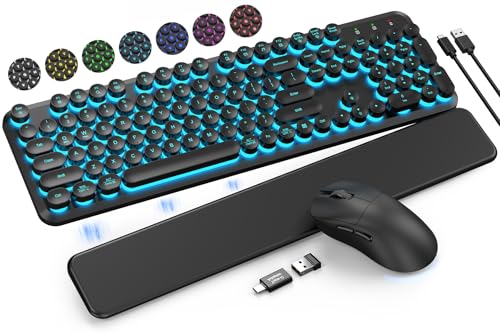
Wireless Keyboard and Mouse Backlit…
COOL 7-COLOR BACKLIGHT – The wireless keyboard has 7 switchable backlights and an RGB mouse that automatically changes color. Light-up letters help you work better at night and use light…

Logitech MX Keys S Wireless…
Fluid Typing Experience: Laptop-like profile with spherically-dished keys shaped for your fingertips delivers a fast, fluid, precise and quieter typing experience Automate Repetitive Tasks: Easily create and share time-saving Smart…

Amazon Basics Wired QWERTY Keyboard,…
KEYBOARD: The keyboard works for Windows with hot keys that enable easy access to Media, My Computer, Mute, Volume up/down, and Calculator EASY SETUP: Experience simple installation with the USB…
Trueque CK23Pro Wireless Typewriter Keyboard
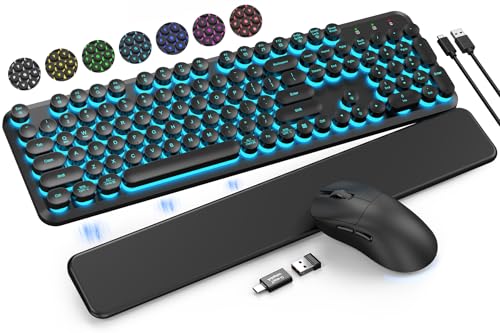
The Trueque CK23Pro brings a classic typewriter look to a modern Windows desk. Its round keys, backlit letters, and matching mouse give it a warm style that stands out from plain office keyboards. The wireless 2.4GHz connection keeps the desk clear of another cable. I also like the included magnetic wrist rest because it gives the hands a soft place to land during long writing blocks.
This keyboard uses a full-size layout, so writers still get a number pad and familiar Windows keys. The backlight can help when I write in a dim room, though the exact light level may not suit every workspace. Its retro design feels more personal than a basic office model. For writers who want the best keyboard for Windows writers to look as good as it feels, this combo offers strong visual appeal and useful daily features.
Pros:
- Wireless 2.4GHz connection reduces cable clutter
- Full-size layout includes a number pad
- Backlit letters help with low-light typing
- Magnetic wrist rest adds support during long sessions
- Matching mouse creates a complete desk setup
- Round keycaps give the keyboard a distinctive typewriter feel
- Works with Windows PCs and laptops
Cons:
- Round keys may require a short adjustment period
- Typewriter styling may not suit a minimalist office
- Wireless devices require battery care
My Recommendation
I recommend the Trueque CK23Pro for Windows writers who want comfort, style, and a full desk bundle. It suits bloggers, students, journal writers, and home-office users who enjoy a warm retro look. The wrist rest can help reduce pressure when I spend hours drafting or editing. The wireless design also gives small desks a cleaner feel.
This is not my first choice for a silent shared office or a writer who wants a very flat laptop-style key feel. Still, it offers good value because the package includes both the keyboard and mouse. If design matters as much as function, this may be the most inviting best keyboard for Windows writers in this group.
Logitech MX Keys S Wireless Keyboard

The Logitech MX Keys S is built for writers who prefer a clean, low-profile keyboard. Its keys have a soft, laptop-like shape that helps guide each fingertip to the center. The result feels steady and precise without the tall motion of many mechanical keyboards. I find this type of design useful when I switch between writing, editing, and quick web research.
Wireless connectivity gives the MX Keys S a tidy desk and flexible placement. It also includes dedicated controls that can help with media, brightness, and common daily tasks, depending on the connected system and setup. The graphite finish looks professional in a home office or shared workspace. For writers who want a refined best keyboard for Windows writers with a quiet, modern feel, this Logitech model is a strong pick.
Pros:
- Low-profile keys feel smooth and familiar
- Concave key shape helps improve finger placement
- Wireless design keeps the work area neat
- Professional graphite finish fits most desks
- Comfortable for long typing and editing sessions
- Useful shortcut and media controls support daily work
- Compact feel saves space without losing a practical layout
Cons:
- Costs more than a basic wired keyboard
- Low-profile keys may feel too shallow for mechanical keyboard fans
- Battery charging adds another task to remember
My Recommendation
The Logitech MX Keys S is best for serious writers, editors, students, and remote workers who type for several hours each day. I would choose it for a quiet office where loud click sounds could distract other people. Its low-profile design feels controlled, and the keys do not demand much finger travel. That can make repeated editing and note-taking feel less tiring.
This keyboard costs more than the simplest options, but the build, feel, and wireless convenience help explain the price. Writers who want a polished desk tool rather than a decorative keyboard will likely appreciate it. In my view, it is the strongest all-around best keyboard for Windows writers in this review.
Amazon Basics Full-Size Wired Keyboard

The Amazon Basics wired keyboard keeps things simple. It uses a full-size QWERTY layout with a number pad and a direct USB connection. I like this setup for writers who want to plug in and start typing without pairing, charging, or installing extra software. The black design is plain, but it fits almost any Windows PC, laptop desk, or school workstation.
Media controls provide quick access to common functions while I work. The wired link also avoids the small delays and battery concerns that can come with wireless keyboards. Its familiar layout makes the learning curve very short. If your goal is the best keyboard for Windows writers at a low cost, this model delivers the core typing tools without adding features you may never use.
Pros:
- Simple plug-and-play USB connection
- Full-size layout includes a number pad
- Dedicated media controls add daily convenience
- No batteries or wireless pairing required
- Familiar QWERTY layout suits most Windows users
- Plain black design works in home and office spaces
- Usually costs less than feature-rich wireless models
Cons:
- Wired cable limits desk placement
- Does not offer backlighting for dark rooms
- Basic construction may feel less premium
My Recommendation
I recommend the Amazon Basics keyboard for students, new PC owners, office workers, and writers who want reliable value. It is also a sensible choice for a shared computer, library desk, or backup workstation. The wired connection keeps setup simple and removes battery anxiety. Writers who mainly use Word, Google Docs, email, and web tools will find the layout easy to use.
This keyboard does not try to look special or act like a gaming device. That restraint is part of its appeal. It is a practical best keyboard for Windows writers when price, simplicity, and dependable everyday typing matter more than lighting or wireless freedom.
Camiysn Retro Mechanical Keyboard

The Camiysn retro mechanical keyboard takes a bold approach to writing gear. Its pink design, round keycaps, and white backlight give the desk a playful style. Blue switches provide a more noticeable mechanical response than a standard membrane keyboard. I can feel and hear each press, which some writers enjoy because it makes typing feel active and precise.
This is a wired 104-key keyboard, so it offers a traditional full-size layout for Windows users. The mechanical switch feel can help writers who like clear feedback under each finger. However, the sound may bother people nearby, especially in a quiet room. For users who want the best keyboard for Windows writers with personality and a more classic mechanical feel, the Camiysn is a fun option.
Pros:
- Mechanical switches provide clear tactile feedback
- Full-size 104-key layout supports familiar Windows use
- White backlight helps keys stand out in dim light
- Round keycaps create a distinctive retro typing feel
- Bold pink design adds personality to a writing desk
- Wired connection avoids wireless pairing issues
- Useful for writers who enjoy audible key feedback
Cons:
- Blue switches can be loud in shared spaces
- Wired design limits placement flexibility
- Mechanical keys may feel tiring until users adjust
My Recommendation
The Camiysn keyboard suits creative writers, streamers, students, and home users who want their keyboard to become part of the room’s style. It works well for people who enjoy strong feedback and a clear press with every letter. I would use it in a private office, bedroom, or personal studio. The bright look also makes it a nice choice for a themed desk setup.
I would not suggest it for a shared office, classroom, or quiet recording space because the blue switches may create noticeable sound. Still, it offers an engaging typing experience at a reasonable level for a mechanical model. It is the best keyboard for Windows writers who value character and switch feedback over silent operation.
How I Choose a Windows Keyboard for Writing
Writing uses a keyboard differently than gaming or casual browsing. A writer may press the same keys for hours while drafting, revising, researching, and formatting. I look first at comfort, key spacing, layout, and the ease of common Windows shortcuts. A keyboard should feel like a steady pen, not a small obstacle between the idea and the page.
I also check how the keyboard handles long sessions. Good key stability can reduce missed letters and accidental presses. A clear layout helps me move between letters, punctuation, arrow keys, and editing commands without looking down often. These small details matter when a sentence is flowing.
Key Feel and Travel
Key feel is personal, but it has a clear effect on writing comfort. Low-profile keys usually need less finger movement and can feel quick. Mechanical keys often provide a stronger press and more feedback. Basic membrane keys tend to feel soft and familiar.
Neither style is perfect for every writer. If you share a room, a quieter keyboard may be best. If you enjoy a firm press, a mechanical model may make typing more satisfying. I suggest thinking about your current keyboard and asking what you like or dislike about it before choosing a replacement.
Noise Level
Keyboard noise can affect both the writer and the people nearby. A soft keyboard may help in a bedroom, office, or study area. Mechanical blue switches create a louder click that many users enjoy, but that sound can travel across a room.
Noise is not a quality score by itself. It is a fit issue. The Camiysn can feel lively and responsive, while the Logitech MX Keys S is more suitable for quiet work. Pick the sound level that matches your space.
Wireless or Wired?
A wireless keyboard gives more freedom. I can move it closer, shift it aside, or keep the desk free of extra cables. It can also pair well with a laptop or flexible home-office setup. The trade-off is battery care and the need to manage a wireless connection.
A wired keyboard is direct and dependable. It does not need charging, and it usually works as soon as I connect it. The Amazon Basics model is a good example of this simple approach. Writers who use one fixed desk may prefer the stability of a cable.
Full-Size, Tenkeyless, or Compact?
A full-size keyboard includes a number pad. This is useful for accounting, spreadsheets, passwords, and data entry. It also gives writers a familiar arrangement with dedicated navigation keys.
A smaller keyboard saves space and may keep the mouse closer to the body. However, compact layouts can remove or combine keys. The four keyboards here focus on familiar layouts, which helps Windows writers use shortcuts without a long adjustment period.
Windows Shortcut Support
The best keyboard for Windows writers should make common commands easy to reach. I often use Ctrl+C, Ctrl+V, Ctrl+Z, Ctrl+F, Alt+Tab, and the Windows key. Dedicated media or function controls can also save time during research and editing.
Most standard Windows keyboards support these commands without special setup. The bigger issue is key placement. A familiar layout lets me work from memory. That can protect focus when I am deep into a draft.
Backlighting
Backlighting can help when I write in low light. It makes labels easier to see and may reduce the need for a bright desk lamp. Still, backlighting does not replace good room lighting. Eye comfort depends on the whole work area, not just glowing keys.
The Trueque and Camiysn models offer visible lighting. The Amazon Basics keyboard keeps the design simple without it. If you write late at night, consider lighting a useful bonus rather than the main reason to buy.
Keyboard Comfort Tips for Long Writing Sessions
Even the best keyboard for Windows writers cannot fix poor desk posture on its own. I keep my keyboard close enough that my elbows stay near my sides. My wrists remain straight rather than bent upward. This simple setup can make long sessions feel less harsh.
I also take short breaks. Every so often, I look away from the screen, relax my hands, and move my shoulders. A short pause can help more than forcing another hour through tired fingers. Writing is a marathon, so I treat comfort as part of the process.
Keep the Keyboard at the Right Height
Your keyboard should sit where your forearms can rest in a natural line. If it is too high, your wrists may bend upward. If it is too low, your shoulders may reach forward.
A wrist rest can help some people, especially when it supports the palm during pauses. It should not force the wrist into a sharp angle. The Trueque CK23Pro includes a magnetic wrist rest, which may appeal to writers who like extra palm support.
Use Light, Even Keystrokes
You do not need to hit each key with force. Light presses can reduce noise and hand fatigue. Mechanical keyboards may encourage strong feedback, but the switch should still register with a relaxed touch.
If you often bottom out every key, try slowing down for a few minutes. Your hands may learn a softer rhythm. That change can make a larger difference than switching keyboards.
Match the Keyboard to Your Room
A private office gives you more freedom to choose a loud mechanical keyboard. A shared room calls for a quieter model. A dark room may benefit from backlighting, while a bright office may not need it.
Think about the people around you. A keyboard that feels exciting at noon may become annoying during a late-night writing session. The right match keeps both you and your household happier.
Best Keyboard for Windows Writers Comparison
| Best for | Why |
|---|---|
| Quiet, focused daily writing | Logitech MX Keys S offers a smooth low-profile feel and a polished wireless setup. |
| Low-cost plug-and-play work | Amazon Basics provides a full-size layout, USB connection, and simple media controls. |
| Retro style and strong key feedback | Trueque CK23Pro and Camiysn add typewriter looks, with the Camiysn using mechanical blue switches. |
What Writers Should Know Before Buying
Product names can make a keyboard seem more complex than it is. For writing, the basics still matter most. Look at the layout, connection type, key feel, sound, and support for your operating system. Extra colors and lights can be nice, but they should not hide poor comfort.
I also suggest checking the return policy and current listing details before buying. Prices, stock, included accessories, and product revisions can change. Amazon listings may show the newest information for each model. That is especially useful when a product has more than one version.
Do Writers Need a Mechanical Keyboard?
No. A mechanical keyboard can make typing feel more precise, but it is not required for good writing. Many writers prefer quiet, soft keys because they reduce noise and finger effort.
Mechanical models are best for people who enjoy clear feedback and a more active typing feel. The Camiysn offers that experience. The Logitech MX Keys S suits writers who want a smoother and quieter approach.
Is a Wireless Keyboard Reliable for Writing?
A modern wireless keyboard can work well for writing when it has a stable connection and enough battery life. It removes cable clutter and lets you change your desk position. The main concern is remembering to charge or replace the battery.
If you want the fewest possible variables, choose a wired model. The Amazon Basics keyboard starts working as soon as it connects. Both connection types can serve writers well.
Does a Number Pad Matter?
A number pad matters if you enter figures, manage budgets, or work with spreadsheets. It also helps users who prefer a full-size layout. For pure writing, it is not essential.
A full-size keyboard takes more desk space. If your mouse feels too far away, a smaller design may feel better. The models in this review keep familiar full-size layouts, so they suit users who want dedicated keys.
What Is the Best Keyboard for Windows Writers on a Budget?
The Amazon Basics wired keyboard is the clearest budget choice in this group. It offers a familiar full-size design, USB connection, and media controls. It skips premium extras but covers the main needs for Word, email, schoolwork, and web writing.
For a low-cost keyboard with more style, the Trueque or Camiysn models may be more appealing. Their value depends on whether you want wireless features, backlighting, or mechanical feedback.
Which Keyboard Is Best for Long Hours?
The Logitech MX Keys S is my top choice for long daily sessions. Its low-profile shape and controlled key feel support steady typing. The Trueque CK23Pro is also worth considering if you prefer a wrist rest and a more decorative design.
Comfort still depends on posture, breaks, and desk height. No keyboard can replace healthy work habits. Choose the model that feels natural after several minutes of typing, not just the one that looks attractive in a photo.
FAQs Of Best Keyboard for Windows Writers
What is the best keyboard for Windows writers?
The Logitech MX Keys S is the best overall choice for most Windows writers. It offers a smooth low-profile feel, wireless convenience, and a professional design. The Amazon Basics model is better if you want the lowest cost.
Is a wired or wireless keyboard better for writing?
Both can work well. Wired keyboards offer simple setup and no charging, while wireless keyboards keep the desk cleaner. Choose wired for fixed desks and wireless for flexible work areas.
Are mechanical keyboards good for writers?
Mechanical keyboards are good for writers who like clear feedback and a firm press. Some switches are loud, so they may not suit shared rooms. The Camiysn is best for private spaces where sound is not a concern.
Should I buy a backlit keyboard for writing?
Backlighting helps you see key labels in a dim room. It is useful, but not essential for daytime writing. Room lighting and screen brightness still play a major role in eye comfort.
What Windows features should a writing keyboard support?
Look for a familiar QWERTY layout, Windows key, Ctrl keys, arrow keys, and easy access to function controls. Media keys can also help during research and breaks. Most standard keyboards support common Windows shortcuts without extra setup.
Final Verdict: Which Should You Buy?
The Logitech MX Keys S is my top pick for the best keyboard for Windows writers. Choose the Amazon Basics model for simple value, Trueque for retro wireless style, or Camiysn for loud mechanical feedback.
Your ideal Windows writing keyboard should match your hands, room, and work style. Pick comfort first, then add wireless freedom, lighting, or style as needed.

I’m James Terban, a teacher with a degree in Education and five years of experience working with students of all ages, from young kids learning their first grammar rules to adults picking up English as a second language. I started Linguistics Guide because I kept seeing good learners hit a wall due to explanations that were either too vague or too complicated. Every article here comes from a real question I have heard in a classroom or seen asked online.