

The best keyboard for typing blends comfort, quiet keys, smart layout, and reliable performance for long daily use.
If your hands feel tired after a long email, report, or study session, your keyboard may be the cause. A poor layout can make every sentence feel like a small chore. I looked at comfort, key feel, wireless use, size, and daily value to find the best keyboard for typing in different homes and work spaces. These picks suit office workers, students, writers, gamers, and anyone who spends hours at a desk.

Logitech MX Keys S Wireless…
Fluid Typing Experience: Laptop-like profile with spherically-dished keys shaped for your fingertips delivers a fast, fluid, precise and quieter typing experience Automate Repetitive Tasks: Easily create and share time-saving Smart…

Logitech Wave Keys Wireless Ergonomic…
Feel the Wave: Get comfier with Wave Keys, the ergonomic wireless keyboard shaped to help workdays go easier on you Type in comfort all day long: The wavy design of…

Logitech Ergo K860 Wireless Ergonomic…
Improved Typing Posture: Type more naturally with a curved, split keyframe and reduce muscle strain on your wrists and forearms thanks to the sloping keyboard design Pillowed Wrist Rest: Curved…
Logitech MX Keys S Wireless Keyboard

The Logitech MX Keys S is a strong choice for people who want a clean, quiet, and smooth typing board. Its low-profile design keeps the hand movement short, which can make long work sessions feel less tiring. The rounded, indented key tops help guide each finger toward the center of the key. I find this style useful when I move between emails, documents, spreadsheets, and web pages all day.
This keyboard has a full layout with a number pad, so it works well for office work and data entry. It also supports wireless use and can pair with more than one device, which helps people who switch between a computer and a tablet. The backlight is useful in a dim room, while the slim body keeps a desk looking neat. For many users, the MX Keys S is the best keyboard for typing when quiet action and a polished feel matter most.
Pros:
- Quiet keys suit shared offices and bedrooms
- Low profile reduces large finger movement
- Comfortable indented key tops guide the fingers
- Full-size layout includes a number pad
- Wireless design keeps the desk less cluttered
- Backlighting helps with late-night typing
- Works well for office tasks and long documents
Cons:
- Low-profile keys may feel too flat for mechanical keyboard fans
- It costs more than a basic office keyboard
- Backlight use can increase the need for charging
Logitech Wave Keys Ergonomic Keyboard

The Logitech Wave Keys takes a softer approach to ergonomic typing. Its wave-shaped key layout raises and lowers the keys across the board, giving the hands a more natural resting path. A cushioned wrist rest supports the lower palms while you type. This design can feel friendly to users who want more comfort but do not want a sharply split keyboard.
The Wave Keys is especially useful for home offices, customer service work, and school tasks that involve many hours of text. It gives the hands a wider, more relaxed position than a simple flat keyboard. The full-size layout also leaves room for number work and familiar navigation keys. If wrist comfort is your main concern, this may be the best keyboard for typing without a long adjustment period.
Pros:
- Wave layout encourages a more relaxed hand position
- Built-in wrist rest adds useful palm support
- Gentle shape is easier to learn than a split design
- Full-size layout works for office and home tasks
- Wireless use reduces cable clutter
- Quiet action fits shared spaces
- Good match for long email and document sessions
Cons:
- The wide shape takes more desk space
- Some users may need time to adjust to the wave layout
- The wrist rest is not removable for every setup
Logitech Ergo K860 Split Keyboard

The Logitech Ergo K860 is made for people who want a more ergonomic typing position. Its split layout separates the left and right key groups, while the curved shape helps keep the wrists in a less flat position. The tall wrist rest supports the palms before and after each typing session. I would look closely at this model if hand comfort matters more than a small footprint.
This keyboard has a familiar full-size layout, so it still works for numbers, shortcuts, and daily office tasks. However, the unusual shape requires a real learning period, especially if you type quickly on a standard board. Once adjusted, many users may find that the layout feels more natural during long work days. The Ergo K860 is one of the best keyboard for typing choices for writers, programmers, and office users who want strong ergonomic support.
Pros:
- Split layout supports a more open hand position
- Curved design helps reduce a flat wrist angle
- Large wrist rest supports the palms well
- Full-size layout includes a number pad
- Wireless setup keeps the work area clean
- Useful for long office and writing sessions
- Dedicated keys make common tasks easier
Cons:
- Large body needs plenty of desk room
- Typing takes time to relearn
- Not ideal for users who prefer a compact board
Logitech K270 Full-Size Wireless Keyboard
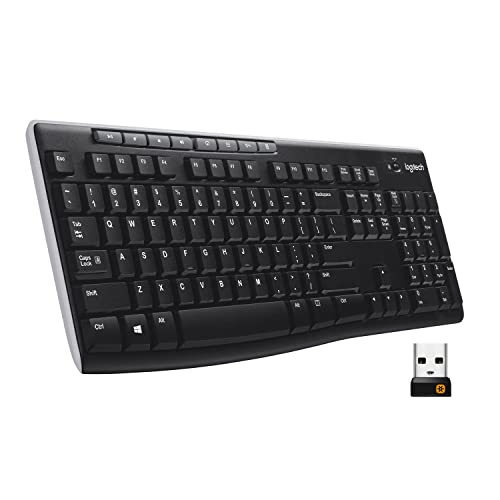
The Logitech K270 is a simple wireless keyboard that focuses on basic daily work. It uses a familiar full-size layout with a number pad, function row, and standard navigation keys. The keys have a traditional height and spacing, which makes the board easy to understand for most users. It is a practical pick for a home computer, office desk, or shared workstation.
This model does not try to add a premium feel or a deep list of advanced features. Instead, it offers a straightforward typing tool for email, school work, browsing, and basic data entry. Its wireless receiver helps reduce cable clutter, and the light body is easy to move when needed. For shoppers seeking an affordable best keyboard for typing, the K270 remains a sensible starting point.
Pros:
- Simple layout feels familiar right away
- Full-size number pad helps with data entry
- Wireless receiver reduces desk clutter
- Light design is easy to move
- Useful for basic home and office work
- Traditional key spacing supports easy learning
- Usually offers strong value for budget buyers
Cons:
- It lacks backlighting
- Typing feel is less refined than premium models
- It does not offer an ergonomic split shape
AULA F99 Wireless Mechanical Keyboard

The AULA F99 gives typing fans a different experience from the quiet office boards above. It uses mechanical switches, a compact layout, and a design aimed at people who enjoy clear key feedback. Its hot-swappable structure lets users change compatible switches later, which adds room for personal tuning. The pre-lubed linear switches may also provide a smoother press than a basic membrane keyboard.
This keyboard supports three connection modes, including Bluetooth, wireless, and USB-C wired use. That flexibility makes it useful with a computer, tablet, or supported game system. The smaller layout saves desk space, though it removes some dedicated keys found on a full-size board. The AULA F99 can be the best keyboard for typing for users who want a lively mechanical feel, strong customization, and a board that can also handle gaming.
Pros:
- Mechanical switches provide clear key feedback
- Hot-swap design allows future switch changes
- Tri-mode connection supports flexible device use
- Compact layout leaves more room for a mouse
- USB-C wired mode suits low-latency use
- RGB lighting adds style and dark-room visibility
- Works for typing, gaming, and tablet use
Cons:
- Mechanical keys can be louder than office boards
- Compact layout may take time to learn
- It lacks the full number pad of a full-size keyboard
- Lighting and extra features may feel excessive for simple work
How I Choose a Keyboard for Typing
A keyboard can look impressive in a product photo and still feel wrong after two hours. I focus first on the key shape, spacing, travel, and sound. These small details affect speed, comfort, and error rate more than bright lights or extra buttons. I also check whether the layout matches the user’s work, since a writer and a bookkeeper may need very different boards.
Key Feel and Travel
Key feel describes how a key moves and responds under a finger. Low-profile keys need less movement and often feel quick. Mechanical keys usually offer stronger feedback, but they can make more sound. A good typing keyboard should let you press each key with confidence without forcing your fingers to strike too hard.
Key travel also changes the rhythm of typing. Short travel may feel fast for email and office work. Longer travel can feel more deliberate and satisfying for people who enjoy a firm press. Neither style is best for every person, so I recommend matching the key feel to your habits instead of following a trend.
Ergonomic Shape
A flat keyboard may work well for short tasks, but long sessions can expose weak points in posture. A wave or split shape may give the wrists and forearms a more open position. A wrist rest can also support the palms, though it should not force the wrists upward while you type. The goal is a relaxed position, not a rigid one.
Ergonomic products need an adjustment period. At first, a split board may make familiar letters feel slightly misplaced. I suggest using it for short sessions and building time slowly. If pain continues, take breaks and seek advice from a qualified health professional rather than relying on a keyboard alone.
Keyboard Size and Layout
A full-size keyboard includes the number pad and works well for finance, spreadsheets, and office forms. A compact keyboard removes some keys to save space. A smaller board can make the mouse easier to reach, but it may require function shortcuts for arrows, navigation, or numbers.
Before buying, think about your daily tasks. Writers may prefer a clean board with standard letter keys. Programmers may want easy access to symbols and navigation keys. Gamers may prefer a compact mechanical model, while data workers often need a full number pad.
Wireless or Wired Use
Wireless keyboards make a desk look cleaner and allow easy movement. They are useful for a laptop, tablet, media center, or flexible home office. Still, wireless models need batteries or charging, and a receiver must stay connected or stored safely. A keyboard with more than one connection method gives extra freedom.
Wired keyboards do not need battery care and usually offer a direct connection. They are a good fit for a fixed desk or a gaming setup. USB-C has become common because one cable can handle data and power on many newer devices. Check the device port and operating system before you buy.
Noise Level
Sound matters when you share a room. Quiet scissor or low-profile keys suit offices, bedrooms, and video calls. Mechanical switches can sound crisp, deep, or sharp, depending on the design. A quiet switch is not always silent, so I would still consider the room and the people nearby.
Noise can also affect your own focus. Some typists enjoy the soft rhythm of mechanical keys. Others find each click distracting after a long session. The Logitech MX Keys S and Wave Keys are better for quiet work, while the AULA F99 suits users who welcome more key feedback.
Backlighting
Backlighting helps when the room is dark or when you need to find a less-used key. It does not improve typing skill by itself. Experienced touch typists may rarely need it, while new users can find it useful. Lighting can also use more battery power on a wireless keyboard.
RGB lighting adds color and customization, but it is not a key need for office typing. I treat lighting as a bonus after comfort, layout, connection, and build quality. A plain keyboard with great key feel is often a better buy than a bright keyboard that causes hand strain.
Battery and Connection Care
Wireless performance depends on more than the keyboard. Keep the receiver close to the board and avoid placing it behind a metal computer case when possible. Bluetooth can be convenient, but the pairing process may vary by device. A wired backup mode is helpful when the battery is low.
Good care can extend keyboard life. Keep food and drinks away from the keys, wipe the surface with a soft dry cloth, and follow the maker’s cleaning instructions. Do not spray liquid into the board. For a mechanical model, use only compatible replacement parts when changing switches or keycaps.
Which Keyboard Style Fits Your Hands?
The right style should feel like a good pair of shoes: supportive, familiar, and easy to use. A low-profile board may suit a fast office typist who wants short key movement. A wave keyboard may help someone who wants a gentle change from a flat layout. A split board offers more support but asks for more patience.
Mechanical boards appeal to people who care about feedback and customization. They can make typing feel more engaging, like writing with a smooth pen instead of a dry one. However, sound and compact layouts may not suit every workplace. I would pick a mechanical board for enjoyment and control, not simply because it is popular.
Typing Comfort Tips for Any Keyboard
Place the keyboard so your elbows stay near your sides. Keep your shoulders relaxed and let your wrists float lightly rather than pressing hard into the desk. Set the screen near eye level so you do not lean forward while typing. These steps cost nothing and can improve the whole work setup.
Take short breaks during long sessions. Look away from the screen, open and close your hands, and change position. No keyboard can replace good habits. Even the best keyboard for typing works better when you pair it with a suitable chair, desk height, and regular movement.
Use a light touch when you can. Many people strike keys harder as they become tired, which can increase noise and hand stress. A keyboard with clear feedback may help you reduce that force. If a key begins to stick, clean it early instead of pushing harder.
Best Keyboard for Typing: Quick Comparison
| Best for | Why |
|---|---|
| Quiet office typing | MX Keys S offers smooth low-profile keys, backlighting, and a full layout. |
| Ergonomic daily work | Ergo K860 gives the hands a split position with broad wrist support. |
| Mechanical typing and gaming | AULA F99 adds hot-swap switches, tri-mode use, and a compact layout. |
My Recommendation
I recommend the Logitech MX Keys S for most people who want the best keyboard for typing. It offers a quiet feel, a full-size layout, wireless convenience, and a polished design for daily work. Writers, students, remote workers, and office users should find it easy to use. It also makes a strong choice when several people share the same room.
Choose the Wave Keys if you want a softer ergonomic shape without moving straight to a split design. Choose the Ergo K860 if wrist position is your top concern and you can spend time learning its layout. Pick the K270 for simple, low-cost home or office use. Select the AULA F99 if you want a customizable mechanical board for typing and play.
In practical terms, each model solves a different problem. The MX Keys S is the balanced all-rounder. The ergonomic Logitech models focus on relaxed hand placement. The K270 focuses on value, while the AULA F99 focuses on feedback and flexibility. Prices and stock can change, so check the current listing before ordering.
FAQs Of Best Keyboard for Typing
What is the best keyboard for typing long hours?
The Logitech MX Keys S is the best all-round choice for long typing sessions. Its quiet, low-profile keys and full layout suit work, study, and writing. Users who need more ergonomic support may prefer the Wave Keys or Ergo K860.
Are mechanical keyboards good for typing?
Yes, mechanical keyboards can be excellent for typing. They provide clear feedback and many switch choices. They may also be louder and may require more adjustment than a quiet office keyboard.
Is an ergonomic keyboard better for wrist comfort?
An ergonomic keyboard may support a more natural hand and wrist position. Results vary by person and setup. You still need a good desk height, relaxed shoulders, and regular breaks.
Should I buy a full-size or compact keyboard?
Buy a full-size model if you use a number pad or many dedicated keys. Choose a compact board if desk space matters and you do not mind shortcuts. The best choice depends on your daily tasks.
Is wireless reliable for typing?
Modern wireless keyboards can work well for normal typing and office use. Keep the receiver near the keyboard and watch the battery level. Choose a wired or dual-mode model if you need a direct backup connection.
Final Verdict: Which Should You Buy?
The Logitech MX Keys S is my top pick for the best keyboard for typing. It balances comfort, quiet action, full-size function, and wireless ease better than the others.
Choose an ergonomic, budget, or mechanical model when your needs differ. A keyboard that fits your hands and work style will make every word feel easier.

I’m James Terban, a teacher with a degree in Education and five years of experience working with students of all ages, from young kids learning their first grammar rules to adults picking up English as a second language. I started Linguistics Guide because I kept seeing good learners hit a wall due to explanations that were either too vague or too complicated. Every article here comes from a real question I have heard in a classroom or seen asked online.