
Patience, a cornerstone of personal growth and effective communication, is often best understood through vivid imagery. Similes, powerful tools of figurative language, offer a unique way to illustrate the essence of patience by drawing comparisons to relatable concepts.
This article delves into the art of crafting and understanding similes for patience, exploring their grammatical structure, diverse applications, and common pitfalls. Whether you’re an English language learner, a seasoned writer, or simply someone seeking to enhance your expressive abilities, this comprehensive guide will equip you with the knowledge and skills to master the use of similes to convey the multifaceted nature of patience.
Definition of a Simile
A simile is a figure of speech that directly compares two different things using the words “like” or “as.” Its purpose is to create a vivid image or enhance understanding by associating an unfamiliar concept with something familiar. Similes are a fundamental element of figurative language, adding depth and color to writing and speech.
Off to College Deals

Save up to 30% on everything you need for the semester.
Contains affiliate link
In the context of patience, similes help to illustrate the abstract quality by relating it to concrete, relatable experiences or objects. For example, saying someone is “as patient as a saint” provides an immediate understanding of their exceptional tolerance and composure.
The effectiveness of a simile lies in its ability to create a strong connection between the two compared items. This connection should be meaningful and contribute to a clearer understanding of the subject being described.
A well-crafted simile can transform a bland statement into a powerful and memorable image.
Structural Breakdown of Similes
A simile typically consists of three key components: the subject, the linking word (“like” or “as”), and the object of comparison. The subject is the thing being described or characterized.
The linking word establishes the comparison. The object of comparison is the thing that the subject is being compared to.
Young Adults & Students:
Get 6 Months of Prime for $0

Ages 18-24 unlock exclusive perks including:
Contains affiliate link
Subject + Linking Word + Object of Comparison
For example, in the simile “He was as patient as a glacier,” “He” is the subject, “as” is the linking word, and “a glacier” is the object of comparison. The simile suggests that the person’s patience is slow, unwavering, and enduring, like the movement of a glacier.
The structure is straightforward, but the impact depends on the choice of the object of comparison. A strong simile uses an object that resonates with the audience and effectively conveys the intended meaning.
Variations can include modifying phrases to add detail: “She was as patient as a seasoned teacher with a room full of energetic children.” This adds context and makes the comparison more specific and relatable.
Types of Similes for Patience
Similes for patience can be categorized based on the specific aspect of patience they emphasize. Here are some common types:
Similes Highlighting Endurance
These similes focus on the ability to withstand challenges and delays without giving up. They often use imagery of strength, resilience, or long-lasting objects.
Similes Highlighting Calmness
These similes emphasize the serene and composed nature of patience. They often use imagery of peaceful settings, gentle movements, or quiet strength.
Similes Highlighting Understanding
These similes illustrate the empathetic and accepting aspect of patience, focusing on the ability to see things from another’s perspective and avoid judgment. They often use imagery of open-mindedness, wisdom, or compassion.
Similes Highlighting Growth
These similes describe how patience allows for development and improvement over time. They use imagery of nature and nurture to express the concept of patience as a catalyst for positive change.
Similes Highlighting Resilience
These similes emphasize the ability to bounce back from setbacks with continued composure and determination. They often use imagery of flexible materials, healing processes, or steadfast resolve.
Similes for Patience: Examples
The following tables provide a variety of similes illustrating different facets of patience. Each simile aims to create a vivid and relatable image, enhancing the understanding and appreciation of this important virtue.
Similes Highlighting Endurance
This table presents similes that emphasize the enduring nature of patience, showcasing its ability to withstand prolonged challenges and delays without faltering.
| Simile | Explanation |
|---|---|
| As patient as a mountain. | Implies unwavering steadfastness and resilience over time. |
| As patient as a long-distance runner. | Highlights perseverance and sustained effort towards a goal. |
| As patient as a seasoned fisherman. | Suggests a willingness to wait and persevere for a desired outcome. |
| As patient as an oak tree growing. | Emphasizes the slow, steady growth that requires time and endurance. |
| As patient as a rock weathering the storm. | Illustrates the ability to withstand adversity and remain unchanged. |
| As patient as a sculptor chipping away at stone. | Highlights the slow and meticulous process that requires dedication. |
| As patient as a watchmaker assembling intricate parts. | Shows the care and precision required for complex tasks. |
| As patient as a desert waiting for rain. | Emphasizes the long wait and anticipation for a needed resource. |
| As patient as a farmer waiting for the harvest. | Suggests the understanding that good things take time and care. |
| As patient as a long-suffering parent. | Highlights the endless tolerance and understanding of a caregiver. |
| As patient as a marathon runner nearing the finish line. | Emphasizes enduring discomfort and pressing on towards completion. |
| As patient as a chess player calculating their next move. | Suggests careful consideration and strategic planning. |
| As patient as a detective piecing together clues. | Highlights the need for careful observation and analysis. |
| As patient as a scientist conducting long-term research. | Illustrates the commitment to a goal despite slow progress. |
| As patient as a librarian organizing a vast collection. | Emphasizes the need for methodical and systematic approach. |
| As patient as a gardener tending to delicate plants. | Shows the care and attention required for nurturing growth. |
| As patient as an artist perfecting a masterpiece. | Highlights the dedication to achieving excellence over time. |
| As patient as a monk in silent meditation. | Suggests inner peace and unwavering focus. |
| As patient as a snail inching its way forward. | Emphasizes steady progress, no matter how slow. |
| As patient as a spider weaving its web. | Illustrates the meticulous and time-consuming nature of creation. |
| As patient as the earth revolving around the sun. | Highlights a constant, unwavering, and predictable rhythm. |
| As patient as a stone slowly being sculpted by water. | Suggests a gradual transformation over a long period. |
| As patient as a clock ticking away the seconds. | Emphasizes consistent and unhurried progress. |
| As patient as a tree weathering the winter months. | Highlights the ability to endure hardship and emerge stronger. |
| As patient as a river flowing towards the sea. | Suggests unwavering direction despite obstacles. |
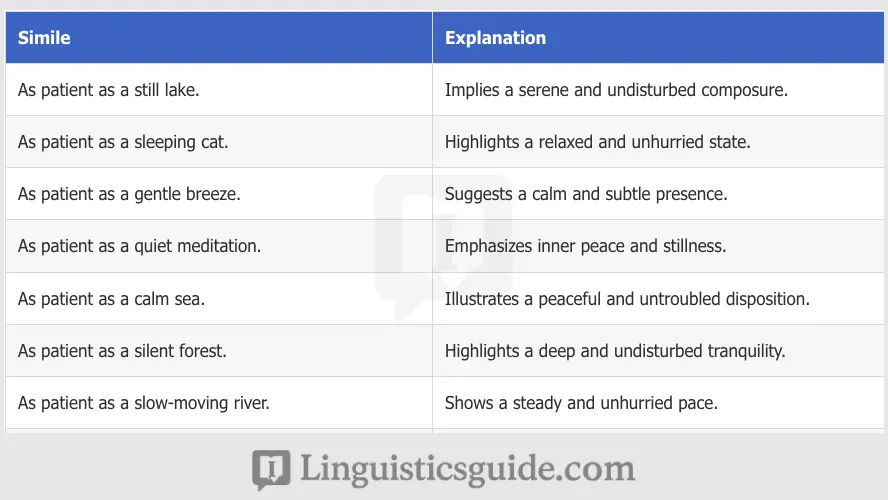
Similes Highlighting Calmness
This table provides similes that illustrate the serene and composed aspect of patience, evoking a sense of tranquility and inner peace.
| Simile | Explanation |
|---|---|
| As patient as a still lake. | Implies a serene and undisturbed composure. |
| As patient as a sleeping cat. | Highlights a relaxed and unhurried state. |
| As patient as a gentle breeze. | Suggests a calm and subtle presence. |
| As patient as a quiet meditation. | Emphasizes inner peace and stillness. |
| As patient as a calm sea. | Illustrates a peaceful and untroubled disposition. |
| As patient as a silent forest. | Highlights a deep and undisturbed tranquility. |
| As patient as a slow-moving river. | Shows a steady and unhurried pace. |
| As patient as a clear night sky. | Emphasizes clarity and peacefulness. |
| As patient as a sleeping child. | Suggests innocence and undisturbed rest. |
| As patient as a peaceful sunset. | Highlights the beauty of calmness and tranquility. |
| As patient as a monk in deep contemplation. | Emphasizes focused and undisturbed thought. |
| As patient as a zen garden. | Suggests harmony and balanced serenity. |
| As patient as a candle burning slowly. | Highlights a steady and gentle presence. |
| As patient as a cloud drifting across the sky. | Illustrates a relaxed and unhurried movement. |
| As patient as a yogi holding a pose. | Emphasizes stillness and control. |
| As patient as a deep, silent breath. | Suggests inner calm and composure. |
| As patient as a lullaby soothing a baby. | Highlights the calming effect of gentle sounds. |
| As patient as a snowflake falling gently. | Emphasizes delicate and peaceful descent. |
| As patient as a dewdrop clinging to a leaf. | Suggests quiet and undisturbed existence. |
| As patient as the earth turning on its axis. | Illustrates slow, steady, and unwavering movement. |
| As patient as the moon watching over the night. | Highlights a silent and constant presence. |
| As patient as a spider waiting in its web. | Suggests calm anticipation and readiness. |
| As patient as a statue standing still for centuries. | Emphasizes enduring stillness and silence. |
| As patient as a tree standing in the wind. | Highlights resilience with a calm exterior. |
| As patient as someone listening to their elders. | Suggests respect and a calm attentive presence. |
Similes Highlighting Understanding
This table provides similes that focus on the empathetic and accepting aspect of patience, emphasizing the ability to see things from another’s perspective.
| Simile | Explanation |
|---|---|
| As patient as a therapist listening to a patient. | Implies deep empathy and attentive listening. |
| As patient as a teacher explaining a difficult concept. | Highlights the ability to break down complex ideas. |
| As patient as a parent guiding a child. | Suggests gentle guidance and unwavering support. |
| As patient as a mediator resolving a conflict. | Emphasizes fairness and impartiality. |
| As patient as a friend offering a listening ear. | Illustrates compassion and understanding. |
| As patient as a mentor guiding a mentee. | Highlights the sharing of wisdom and experience. |
| As patient as a doctor diagnosing a complex illness. | Shows careful analysis and attention to detail. |
| As patient as a wise owl observing the world. | Suggests thoughtful observation and understanding. |
| As patient as a judge hearing a case. | Emphasizes impartiality and fairness in decision-making. |
| As patient as a diplomat negotiating a treaty. | Highlights the ability to find common ground. |
| As patient as a translator interpreting different languages. | Suggests understanding different perspectives. |
| As patient as a historian studying the past. | Emphasizes the careful analysis of complex narratives. |
| As patient as a detective piecing together a puzzle. | Highlights the ability to see the bigger picture. |
| As patient as a counselor helping someone overcome trauma. | Suggests deep empathy and support. |
| As patient as a scientist conducting experiments. | Emphasizes the need to carefully observe and adapt. |
| As patient as a writer crafting a story. | Highlights the development of complex characters and plots. |
| As patient as a musician composing a symphony. | Suggests the harmonious arrangement of different elements. |
| As patient as an architect designing a building. | Emphasizes the careful planning and attention to detail. |
| As patient as a programmer debugging code. | Highlights the ability to identify and correct errors. |
| As patient as a chef perfecting a recipe. | Suggests careful adjustment and refinement. |
| As patient as a wildlife observer tracking animals. | Emphasizes the need to observe and understand natural behavior. |
| As patient as an anthropologist studying a culture. | Highlights the understanding of different traditions and beliefs. |
| As patient as a social worker advocating for the vulnerable. | Suggests empathy and support for those in need. |
| As patient as a volunteer helping others. | Emphasizes selfless service and understanding. |
| As patient as someone listening to a rambling story. | Highlights active listening and empathy. |
Usage Rules for Similes
Using similes effectively requires adherence to certain rules to ensure clarity and impact. The comparison should be logical and easily understood by the audience.
Avoid comparing things that are too dissimilar, as this can lead to confusion rather than clarity.
Clarity: The simile should enhance understanding, not obscure it. The connection between the subject and object of comparison should be evident.
Originality: While common similes can be effective, strive for originality to make your writing more engaging and memorable. Fresh and creative comparisons can leave a lasting impression.
Context: The appropriateness of a simile depends on the context. Consider the tone and purpose of your writing or speech when choosing a simile.
Avoid Cliches: While sometimes useful, overused similes like “as red as a rose” or “as busy as a bee” can lack impact. Try to create original comparisons.
Consistency: Ensure the simile aligns with the overall message and tone of the piece. A jarring simile can disrupt the flow and detract from the intended effect.
Common Mistakes with Similes
Several common mistakes can detract from the effectiveness of similes. Understanding these errors can help you avoid them and create more impactful comparisons.
- Using Metaphors Instead of Similes: Confusing similes with metaphors is a common error. Remember that similes use “like” or “as” to make a comparison, while metaphors imply a direct equivalence.
- Creating Illogical Comparisons: The comparison should be logical and make sense to the audience. Comparing unrelated things can lead to confusion.
- Overusing Similes: Too many similes can clutter your writing and detract from its overall impact. Use them sparingly and strategically.
- Using Cliches: Overused similes lack originality and can make your writing seem uninspired. Strive for fresh and creative comparisons.
Here are some examples of common mistakes and their corrections:
| Incorrect | Correct | Explanation |
|---|---|---|
| He is a lion in patience. | He is as patient as a lion waiting for its prey. | The first sentence is a metaphor. The second is a simile using “as.” |
| She was as patient as a brick wall. | She was as patient as a teacher explaining a difficult concept. | The first comparison is illogical. The second makes more sense in the context of patience. |
| The day was as long as forever. The night was as dark as coal. | The day felt incredibly long. | The original sentence overuses similes. The revised sentence is more concise. |
Practice Exercises
Test your understanding of similes with these practice exercises. Fill in the blanks to complete the similes, focusing on the theme of patience.
- He remained ________ as ________ while waiting for the delayed flight.
- Her patience was ________ as ________ when dealing with the difficult customer.
- The artist was ________ as ________ while working on the intricate details of the painting.
- The gardener tended to the plants with patience ________ as ________.
- The student approached the complex problem with a patience ________ as ________.
- She explained the rules with a patience ________ as ________ to the new players.
- His guidance was ________ as ________, helping me navigate the challenges.
- The negotiator remained ________ as ________ during the tense discussions.
- The detective investigated the case with a patience ________ as ________.
- The scientist conducted the experiment with a patience ________ as ________.
| Question | Answer |
|---|---|
| He remained ________ as ________ while waiting for the delayed flight. | He remained calm as a still lake while waiting for the delayed flight. |
| Her patience was ________ as ________ when dealing with the difficult customer. | Her patience was unwavering as a mountain when dealing with the difficult customer. |
| The artist was ________ as ________ while working on the intricate details of the painting. | The artist was meticulous as a watchmaker while working on the intricate details of the painting. |
| The gardener tended to the plants with patience ________ as ________. | The gardener tended to the plants with patience gentle as a mother’s touch. |
| The student approached the complex problem with a patience ________ as ________. | The student approached the complex problem with a patience persistent as a river carving through stone. |
| She explained the rules with a patience ________ as ________ to the new players. | She explained the rules with a patience clear as a bell to the new players. |
| His guidance was ________ as ________, helping me navigate the challenges. | His guidance was steady as a compass, helping me navigate the challenges. |
| The negotiator remained ________ as ________ during the tense discussions. | The negotiator remained composed as a statue during the tense discussions. |
| The detective investigated the case with a patience ________ as ________. | The detective investigated the case with a patience thorough as a bloodhound. |
| The scientist conducted the experiment with a patience ________ as ________. | The scientist conducted the experiment with a patience unflinching as the north star. |
Create your own similes:
Write five original similes that describe patience in different situations. Consider using unique and imaginative comparisons.
Advanced Topics in Similes
For advanced learners, exploring more complex aspects of similes can enhance their understanding and usage. This includes understanding the subtle nuances of different linking words, such as “like,” “as,” and “than,” and their impact on the comparison.
Extended Similes: These involve developing a simile over several sentences or paragraphs, providing a more detailed and elaborate comparison. This technique can add depth and richness to your writing.
Subverted Similes: These intentionally break the conventional structure or meaning of a simile to create a surprising or humorous effect. This technique can be used to challenge expectations and add a unique voice to your writing.
Similes in different contexts: The effectiveness of a simile can vary depending on the cultural or social context. Understanding these variations can help you tailor your similes to specific audiences.
Frequently Asked Questions
- What is the difference between a simile and a metaphor?
A simile uses “like” or “as” to compare two things, while a metaphor directly equates them without using these words. For example, “He is as strong as an ox” (simile) versus “He is an ox” (metaphor).
- How can I make my similes more original?
Avoid clichés and think outside the box. Consider using unexpected or less common comparisons to create a fresh and memorable image. Draw inspiration from your own experiences and observations.
- Can a simile be too complex?
Yes, a simile can be too complex if it is difficult for the audience to understand the connection between the two things being compared. Clarity is key.
- Is it okay to use similes in formal writing?
Yes, similes can be used in formal writing, but use them judiciously and ensure they are appropriate for the tone and purpose of your writing. Avoid overly casual or informal comparisons.
- How do I know if my simile is effective?
An effective simile creates a vivid image, enhances understanding, and resonates with the audience. Test your similes on others to get feedback and ensure they are clear and impactful.
- What are some common mistakes to avoid when using similes?
Avoid using metaphors instead of similes, creating illogical comparisons, overusing similes, and using clichés. Strive for clarity, originality, and appropriateness.
- Can similes be used in poetry?
Absolutely! Similes are a common and effective tool in poetry, adding imagery and depth to the verses. They can help create a more vivid and emotional experience for the reader.
- How important is the choice of words in a simile?
The choice of words is crucial. The linking word (“like” or “as”) sets the comparison, and the object of comparison determines the image that is created. Choose words that are precise and evocative to achieve the desired effect.
- Are similes only useful for describing physical attributes?
No, similes can be used to describe abstract concepts, emotions, behaviors, and any other aspect of a subject. They are versatile tools for enhancing understanding and creating vivid imagery.
- How can I improve my ability to create effective similes?
Practice regularly, read widely to observe how other writers use similes, and seek feedback on your own writing. Pay attention to the details of the world around you and look for connections between seemingly unrelated things.
Conclusion
Mastering the art of crafting similes for patience unlocks a powerful tool for expressing complex ideas with clarity and creativity. By understanding the structural components, diverse applications, and common pitfalls of similes, you can effectively enhance your writing and communication skills.
Remember to strive for originality, clarity, and appropriateness in your comparisons, and practice regularly to hone your abilities.
The ability to convey the essence of patience through vivid imagery not only enriches your language but also deepens your understanding and appreciation of this essential virtue. Continue to explore the nuances of figurative language and embrace the power of similes to transform your words into memorable and impactful expressions.
Practice using the similes provided in the examples, and also create your own unique comparisons so that you can effectively communicate the multifaceted nature of patience.

I’m James Terban, a teacher with a degree in Education and five years of experience working with students of all ages, from young kids learning their first grammar rules to adults picking up English as a second language. I started Linguistics Guide because I kept seeing good learners hit a wall due to explanations that were either too vague or too complicated. Every article here comes from a real question I have heard in a classroom or seen asked online.