
Understanding similes enriches our ability to describe the world around us with vivid imagery and creative expression. This article delves into the art of crafting similes specifically for the color blue, exploring its various shades, emotions, and associations.
Mastering similes enhances your writing and speaking skills, enabling you to convey nuanced meanings and create memorable impressions. Whether you’re a student, writer, or language enthusiast, this guide offers a comprehensive exploration of similes for blue, providing numerous examples, practical exercises, and advanced insights to elevate your command of the English language.
Table of Contents
- Definition of Simile
- Structural Breakdown of Similes
- Types and Categories of Blue
- Examples of Similes for Blue
- Usage Rules for Similes
- Common Mistakes with Similes
- Practice Exercises
- Advanced Topics in Similes
- Frequently Asked Questions
- Conclusion
Definition of Simile
A simile is a figure of speech that compares two unlike things using the words “like” or “as.” It is a powerful tool for creating vivid imagery and enhancing descriptions by drawing parallels between different concepts. Similes help readers or listeners understand abstract ideas by relating them to something more concrete and familiar.
Off to College Deals

Save up to 30% on everything you need for the semester.
Contains affiliate link
The effectiveness of a simile lies in its ability to evoke a specific feeling or image, making the description more impactful and memorable.
In essence, a simile functions as a bridge, connecting two disparate entities to highlight a shared quality or characteristic. This comparison allows for a deeper understanding and appreciation of the subject being described.
Similes are commonly used in literature, poetry, and everyday conversation to add color, depth, and clarity to language.
Structural Breakdown of Similes
The basic structure of a simile involves three key components: the subject being described, the linking word (“like” or “as”), and the object to which the subject is being compared. This structure creates a clear and direct comparison, making it easy for the audience to understand the intended meaning.
The formula can be represented as: Subject + Linking Word + Object. For example, in the simile “The sky was as blue as a sapphire,” the subject is “the sky,” the linking word is “as,” and the object is “a sapphire.” This structure establishes a direct comparison between the color of the sky and the color of a sapphire.
Young Adults & Students:
Get 6 Months of Prime for $0

Ages 18-24 unlock exclusive perks including:
Contains affiliate link
Here’s a breakdown of the common patterns:
- As + Adjective + As + Noun: This is a common pattern used to compare qualities. Example: As blue as the ocean.
- Like + Noun: A simpler structure focusing on direct comparison. Example: Blue like the summer sky.
Types and Categories of Blue
Blue is a versatile color with a wide range of shades and associations. Understanding these nuances is crucial for crafting effective and precise similes.
Different shades of blue can evoke different emotions and images, influencing the overall impact of the simile.
Sky Blue
Sky blue is a light, airy shade of blue often associated with tranquility, freedom, and openness. It is reminiscent of clear skies and peaceful days.
Ocean Blue
Ocean blue encompasses a range of blues, from the deep, dark hues of the open sea to the lighter, more vibrant shades of coastal waters. It is often associated with depth, mystery, and the vastness of nature.
Sapphire Blue
Sapphire blue is a rich, jewel-toned blue known for its brilliance and clarity. It is associated with royalty, elegance, and preciousness.
Navy Blue
Navy blue is a dark, sophisticated shade of blue often associated with authority, stability, and professionalism. It is commonly used in uniforms and formal attire.
Feeling Blue
“Feeling blue” is an idiomatic expression that describes a state of sadness or melancholy. Similes in this category often relate to feelings of loneliness, despair, or emotional distress.
Examples of Similes for Blue
The following sections provide extensive examples of similes for different types of blue, categorized for clarity and ease of reference. Each category includes a variety of similes to illustrate the diverse ways in which blue can be described.
Sky Blue Similes
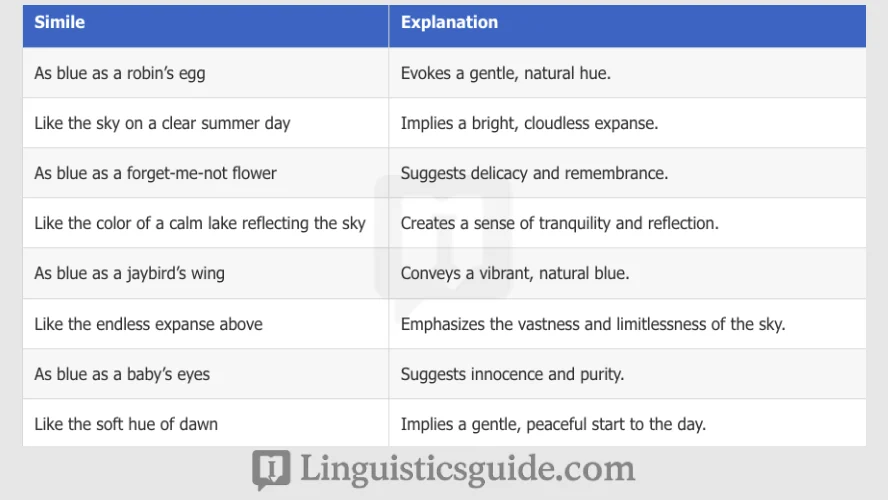
Sky blue is often associated with peace, serenity, and the freedom of open space. Here are some similes that capture the essence of sky blue:
The following table provides examples of similes for the color sky blue. Each example highlights different aspects and qualities of this hue.
| Simile | Explanation |
|---|---|
| As blue as a robin’s egg | Evokes a gentle, natural hue. |
| Like the sky on a clear summer day | Implies a bright, cloudless expanse. |
| As blue as a forget-me-not flower | Suggests delicacy and remembrance. |
| Like the color of a calm lake reflecting the sky | Creates a sense of tranquility and reflection. |
| As blue as a jaybird’s wing | Conveys a vibrant, natural blue. |
| Like the endless expanse above | Emphasizes the vastness and limitlessness of the sky. |
| As blue as a baby’s eyes | Suggests innocence and purity. |
| Like the soft hue of dawn | Implies a gentle, peaceful start to the day. |
| As blue as a winter sky before snowfall | Evokes a crisp, clean, and serene feeling. |
| Like a watercolor painting of the heavens | Suggests a delicate, artistic representation of the sky. |
| As blue as the summer sky at noon | Conveys a bright, vibrant, and cloudless sky. |
| Like the serene backdrop of a dream | Implies a peaceful, ethereal, and calming atmosphere. |
| As blue as the morning glory flower | Suggests a delicate, vibrant, and ephemeral beauty. |
| Like the color of a postcard-perfect sky | Evokes a picturesque, idealized, and serene landscape. |
| As blue as the sky after a gentle rain | Conveys a fresh, clean, and revitalized atmosphere. |
| Like a canvas painted with the hues of twilight | Implies a soft, gentle, and dreamy transition from day to night. |
| As blue as the distant mountains on a clear day | Suggests a far-off, serene, and tranquil vista. |
| Like the sky reflected in a still pond | Evokes a peaceful, calm, and reflective setting. |
| As blue as the feathers of a bluebird | Conveys a vibrant, natural, and lively beauty. |
| Like the color of hope on the horizon | Implies optimism, promise, and a bright future. |
| As blue as a clear, cloudless sky in spring | Suggests renewal, freshness, and a vibrant atmosphere. |
| Like the backdrop to a perfect summer day | Evokes warmth, joy, and a sense of relaxation. |
| As blue as the eyes of someone lost in thought | Conveys depth, introspection, and a contemplative mood. |
| Like the color of a peaceful, sunlit morning | Implies tranquility, serenity, and a gentle start to the day. |
Ocean Blue Similes
Ocean blue evokes feelings of depth, mystery, and the vastness of the sea. Here are some similes that capture the essence of ocean blue:
The table below showcases similes that relate to the color of the ocean, emphasizing its depth, vastness, and varying shades.
| Simile | Explanation |
|---|---|
| As blue as the deep sea | Implies a sense of mystery and depth. |
| Like the color of the ocean on a stormy day | Suggests power, turbulence, and drama. |
| As blue as a tropical lagoon | Evokes a sense of paradise and tranquility. |
| Like the endless horizon of the sea | Emphasizes the vastness and limitlessness of the ocean. |
| As blue as the depths where sunlight cannot reach | Conveys a sense of mystery and the unknown. |
| Like the color of a sailor’s eyes after years at sea | Suggests experience, wisdom, and a connection to the ocean. |
| As blue as the crest of a breaking wave | Evokes energy, movement, and the power of the ocean. |
| Like the shimmering surface of the water under the sun | Implies brightness, reflection, and a sense of wonder. |
| As blue as the deepest trench in the ocean floor | Conveys a sense of profound depth and mystery. |
| Like a sapphire reflecting the endless sky | Suggests preciousness, beauty, and a connection to nature. |
| As blue as the sea on a calm, clear morning | Evokes peace, tranquility, and a sense of serenity. |
| Like the color of ancient, uncharted waters | Implies mystery, history, and the unknown depths of the ocean. |
| As blue as the heart of a powerful storm | Conveys intensity, strength, and the force of nature. |
| Like the ocean depths where secrets are kept | Suggests mystery, intrigue, and hidden knowledge. |
| As blue as the water surrounding a deserted island | Evokes isolation, tranquility, and a sense of escape. |
| Like the color of the sea as it meets the horizon | Implies vastness, limitlessness, and the merging of elements. |
| As blue as the eyes of a mythical sea creature | Conveys mystery, magic, and the allure of the unknown. |
| Like the deep, resonating sound of the ocean | Suggests depth, power, and the constant rhythm of nature. |
| As blue as the ocean reflecting the twilight sky | Evokes a serene, calming, and magical atmosphere. |
| Like the color of the sea where legends are born | Implies history, myth, and the enduring power of storytelling. |
| As blue as the depths where sunlight fades away | Conveys mystery, darkness, and the unknown wonders of the deep. |
| Like the ocean’s embrace, both calming and powerful | Suggests comfort, strength, and the dual nature of the sea. |
| As blue as the waters that whisper ancient tales | Evokes history, legend, and the timeless stories of the ocean. |
Sapphire Blue Similes
Sapphire blue is a rich, jewel-toned blue that evokes feelings of elegance, royalty, and preciousness. Here are some similes that capture the essence of sapphire blue:
The following table provides similes that compare the color to sapphire, emphasizing its brilliance, luxury, and captivating beauty.
| Simile | Explanation |
|---|---|
| As blue as a sapphire gem | Implies brilliance and preciousness. |
| Like the color of royal robes | Suggests luxury, power, and authority. |
| As blue as a queen’s jewels | Evokes elegance, wealth, and sophistication. |
| Like the shimmering depths of a precious stone | Emphasizes beauty, rarity, and value. |
| As blue as the heart of a flame | Conveys intensity, passion, and energy. |
| Like the color of a starlit night sky | Suggests wonder, magic, and the vastness of the universe. |
| As blue as the eyes of a noble | Evokes dignity, grace, and refinement. |
| Like the deep, rich hue of an expensive fabric | Implies luxury, quality, and sophistication. |
| As blue as a twilight sky reflecting on water | Conveys serenity, beauty, and a sense of peace. |
| Like the color of a perfectly cut gemstone | Suggests precision, artistry, and flawless beauty. |
| As blue as the gown of a fairy-tale princess | Evokes magic, enchantment, and a sense of wonder. |
| Like the vibrant blue of an artist’s finest pigment | Implies creativity, skill, and the beauty of art. |
| As blue as the depths of a hidden treasure | Conveys mystery, value, and the thrill of discovery. |
| Like the color of a serene and timeless elegance | Suggests sophistication, grace, and enduring beauty. |
| As blue as a royal decree, commanding attention | Evokes power, authority, and unwavering presence. |
| Like the gemstone that captures the essence of dreams | Implies magic, fantasy, and the allure of the imagination. |
| As blue as the whisper of a secret, precious and rare | Conveys intimacy, value, and the beauty of the unknown. |
| Like the color of a serene, moonlit reflection | Suggests calmness, mystery, and the gentle glow of the night. |
| As blue as the heart of a mystical, ancient artifact | Evokes history, magic, and the enduring power of legends. |
Navy Blue Similes
Navy blue is a dark, sophisticated shade of blue that evokes feelings of authority, stability, and professionalism. Here are some similes that capture the essence of navy blue:
The table below provides similes that compare the color to navy blue, highlighting its formality, strength, and dependable nature.
| Simile | Explanation |
|---|---|
| As blue as a navy uniform | Implies authority and professionalism. |
| Like the color of a midnight sky | Suggests mystery, depth, and tranquility. |
| As blue as a dependable suit | Evokes reliability, formality, and trustworthiness. |
| Like the solid foundation of a building | Emphasizes stability, strength, and dependability. |
| As blue as a calm, dark sea at night | Conveys peace, depth, and a sense of mystery. |
| Like the color of a well-worn, trustworthy book cover | Suggests knowledge, wisdom, and timelessness. |
| As blue as the ink used to sign important documents | Evokes authority, significance, and permanence. |
| Like the deep, unwavering gaze of a seasoned leader | Implies strength, experience, and unwavering resolve. |
| As blue as the silent strength of a mountain range | Conveys stability, endurance, and a sense of timelessness. |
| Like the color of the night sky, filled with untold stories | Suggests mystery, intrigue, and the vastness of the universe. |
| As blue as the uniform of a dedicated night watchman | Evokes vigilance, protection, and unwavering dedication. |
| Like the color of a well-maintained, classic car | Implies reliability, timelessness, and enduring quality. |
| As blue as a deep, thoughtful silence | Conveys contemplation, depth, and a sense of inner peace. |
| Like the color of a dependable, time-tested tradition | Suggests stability, history, and enduring value. |
| As blue as the unwavering support of a trusted friend | Evokes loyalty, reliability, and a sense of security. |
| Like the color of a strong, silent guardian | Implies protection, strength, and unwavering presence. |
Similes for Feeling Blue
“Feeling blue” describes a state of sadness or melancholy. Here are some similes that capture this emotional state:
The following table provides similes that capture the feeling of sadness or melancholy, associating it with the color blue.
| Simile | Explanation |
|---|---|
| As blue as a rainy day | Implies gloominess and sadness. |
| Like a melancholic tune played on a lonely saxophone | Suggests sorrowful music and solitude. |
| As blue as a forgotten memory | Evokes nostalgia and a sense of loss. |
| Like the weight of the world on your shoulders | Emphasizes burden, pressure, and emotional heaviness. |
| As blue as the depths of despair | Conveys profound sadness and hopelessness. |
| Like a cloudy, overcast day with no sunshine | Suggests gloom, darkness, and a lack of joy. |
| As blue as the tears of a broken heart | Evokes pain, sorrow, and emotional vulnerability. |
| Like a lone wolf howling at the moon | Implies loneliness, isolation, and a sense of longing. |
| As blue as a faded photograph of happier times | Conveys nostalgia, longing, and a sense of what once was. |
| Like the quiet stillness of a house after everyone has left | Suggests emptiness, solitude, and a sense of loss. |
| As blue as the feeling of being lost in a crowd | Evokes isolation, anonymity, and a lack of connection. |
| Like a wilted flower, longing for the sun | Implies sadness, fragility, and a desire for happiness. |
| As blue as the echo of laughter that has faded away | Conveys nostalgia, sadness, and the fleeting nature of joy. |
| Like a ship lost at sea, without a guiding star | Suggests directionlessness, hopelessness, and a lack of guidance. |
| As blue as a solitary raindrop on a windowpane | Evokes loneliness, isolation, and a sense of quiet sorrow. |
| Like a book with its pages filled with unwritten stories | Implies potential, unrealized dreams, and a sense of longing. |
| As blue as the whisper of a forgotten lullaby | Conveys nostalgia, comfort, and a sense of lost innocence. |
Usage Rules for Similes
Using similes effectively requires understanding and adhering to certain rules. These rules ensure that your similes are clear, impactful, and appropriate for the context.
- Ensure Clarity: The comparison should be easily understood by the audience. Avoid obscure or overly complex references.
- Maintain Relevance: The object being compared should have a clear and logical connection to the subject. The shared quality should be evident.
- Avoid Clichés: Overused similes can diminish the impact of your writing. Strive for originality and creativity.
- Consider Context: The appropriateness of a simile depends on the tone and style of the writing. Use similes that align with the overall message.
- Use Sparingly: While similes can enhance descriptions, overusing them can make your writing feel forced or artificial.
Common Mistakes with Similes
Even experienced writers can make mistakes when using similes. Recognizing these common errors can help you avoid them and improve the quality of your writing.
Here are some common mistakes and how to correct them:
| Incorrect | Correct | Explanation |
|---|---|---|
| As blue as blue. | As blue as the summer sky. | Avoid circular comparisons. |
| Like a car. | Like a fast car. | Ensure the comparison is specific and meaningful. |
| He felt like happy. | He felt like a weight had been lifted. | Compare nouns to nouns, not nouns to adjectives. |
| The ocean was as blue like the sky. | The ocean was as blue as the sky. | Do not mix “as” and “like” in the same simile. |
| Her sadness was like a blue. | Her sadness was like a deep blue sea. | Use a concrete object for comparison, not an abstract concept. |
Practice Exercises
Test your understanding of similes with the following exercises. Fill in the blanks to complete the similes, using your knowledge of blue and its various associations.
Exercise 1: Complete the Similes
| Question | Answer |
|---|---|
| 1. The sky was as blue as a __________. | robin’s egg |
| 2. Feeling blue is like __________. | a rainy day |
| 3. The ocean was as blue as __________. | a tropical lagoon |
| 4. Her eyes were as blue as __________. | forget-me-not flowers |
| 5. The sapphire was as blue as __________. | a queen’s jewels |
| 6. The navy uniform was as blue as __________. | a midnight sky |
| 7. His sadness was like __________. | a melancholic tune |
| 8. The lake was as blue as __________. | the sky reflecting on its surface |
| 9. Her dress was blue like __________. | the ocean on a summer evening |
| 10. The mountains in the distance were as blue as __________. | a hazy dream |
Exercise 2: Create Your Own Similes
Write your own similes for the following prompts:
| Prompt | Your Simile |
|---|---|
| 1. Describe the color of a clear winter sky. | As blue as… |
| 2. Describe the feeling of being content. | Like… |
| 3. Describe the color of a deep ocean trench. | As blue as… |
| 4. Describe the eyes of someone who is wise. | Like… |
| 5. Describe the color of a royal banner. | As blue as… |
| 6. Describe the feeling of being lost. | Like… |
| 7. Describe the color of twilight reflecting on water. | As blue as… |
| 8. Describe the voice of a seasoned captain. | Like… |
| 9. Describe the look of a forgotten memory. | As blue as… |
| 10. Describe the feeling of unwavering support. | Like… |
Advanced Topics in Similes
For advanced learners, exploring more complex aspects of similes can further enhance your understanding and usage. These include:
- Extended Similes: Developing a simile over multiple sentences to create a more detailed and impactful comparison.
- Subverted Similes: Intentionally using a simile in an unexpected or ironic way to create humor or emphasize a point.
- Metaphor vs. Simile: Understanding the subtle differences between similes and metaphors and when to use each effectively. While a simile is a direct comparison using “like” or “as,” a metaphor implies a comparison without using these words. For example, “He is like a lion” (simile) vs. “He is a lion” (metaphor).
- Cultural Context: Being aware of how cultural references and associations can affect the interpretation of similes.
Frequently Asked Questions
Here are some frequently asked questions about similes:
- What is the difference between a simile and a metaphor?
A simile is a direct comparison using “like” or “as,” while a metaphor is an implied comparison without using these words. Similes state that something is like something else, whereas metaphors state that something is something else. - Why are similes important in writing?
Similes add vividness, clarity, and depth to writing. They help readers understand abstract ideas by relating them to familiar concepts and creating memorable images. Effective similes can elevate your writing from plain to engaging and evocative. - How can I avoid using clichés in my similes?
Strive for originality by thinking outside the box and using unique comparisons. Consider the specific qualities you want to emphasize and brainstorm objects or concepts that share those qualities in unexpected ways. Read widely and pay attention to the similes used by other writers to inspire your own creativity. - Can a simile be too complex?
Yes, if the comparison is too obscure or convoluted, it can confuse the reader and diminish the impact of the simile. Aim for clarity and ensure that the connection between the subject and the object being compared is easily understood. - Is it okay to use similes in formal writing?
Yes, but use them judiciously. Similes can add color and interest to formal writing, but they should be used sparingly and in a manner that aligns with the overall tone and style. Avoid overly casual or whimsical similes in formal contexts. - How do I choose the right words for my similes?
Consider the specific qualities you want to emphasize and choose words that accurately convey those qualities. Use vivid and descriptive language to create a strong image in the reader’s mind. Pay attention to the connotations of the words you choose and ensure that they align with the intended meaning. - What are some common examples of similes?
Some common examples include “as brave as a lion,” “as fast as a cheetah,” and “like two peas in a pod.” While these similes are well-known, it’s generally better to create original similes to make your writing more unique. - How can I improve my ability to write effective similes?
Practice regularly, read widely, and pay attention to the similes used by other writers. Experiment with different comparisons and ask for feedback from others. The more you practice, the better you will become at crafting effective and memorable similes. - Can a simile be used to describe a feeling?
Yes, similes can be used to describe feelings by comparing them to tangible objects or experiences. For example, “Feeling blue is like a rainy day” effectively conveys the sense of gloom and sadness associated with the color blue. - Are there any specific types of words that work best in similes?
Nouns and adjectives are commonly used in similes. Nouns provide concrete objects or concepts for comparison, while adjectives describe the qualities being compared. Verbs can also be used to create dynamic and action-oriented similes.
Conclusion
Mastering similes for blue, and indeed for any subject, enhances your ability to communicate effectively and creatively. By understanding the structure, usage rules, and common pitfalls of similes, you can craft vivid and memorable descriptions that captivate your audience.
Remember to strive for originality, clarity, and relevance in your comparisons, and to use similes judiciously to enhance, rather than overwhelm, your writing.
Continue to practice and explore the endless possibilities of figurative language to elevate your communication skills. The ability to paint pictures with words is a valuable asset in any field, from writing and speaking to marketing and leadership.
Embrace the power of similes and let your creativity shine.

I’m James Terban, a teacher with a degree in Education and five years of experience working with students of all ages, from young kids learning their first grammar rules to adults picking up English as a second language. I started Linguistics Guide because I kept seeing good learners hit a wall due to explanations that were either too vague or too complicated. Every article here comes from a real question I have heard in a classroom or seen asked online.