

The phrase “my work here is done” is a common idiom that signifies completion, often with a hint of satisfaction or even humor. Understanding its grammatical structure and appropriate usage is crucial for effective communication. This phrase showcases the perfect tense and its implications for indicating completed actions and their relevance to the present.
This article delves into the grammar behind this expression, explores its various contexts, and provides practical exercises to help you master its use. Whether you are an English language learner or simply aiming to refine your communication skills, this comprehensive guide will equip you with the knowledge and confidence to use “my work here is done” effectively.
This article is particularly beneficial for English language learners, writers, and anyone interested in improving their understanding of English grammar and idiomatic expressions. By the end of this article, you will not only understand the grammatical structure of the phrase but also be able to recognize its nuances and use it appropriately in various contexts.
Variations like my job here is done or my work is done here convey the same sense of completion and accomplishment as the more common phrase. You can also use my job here is finished to indicate the end of a task with slightly more finality. In reflective contexts, someone might say i think my work here is done, adding a personal note of evaluation or satisfaction after completing their responsibilities.
Table of Contents
- Introduction
- Definition and Grammatical Overview
- Structural Breakdown
- Tense and Aspect
- Idiomatic Usage and Context
- Examples
- Usage Rules
- Common Mistakes
- Practice Exercises
- Advanced Topics
- Frequently Asked Questions (FAQ)
- Conclusion
Definition and Grammatical Overview
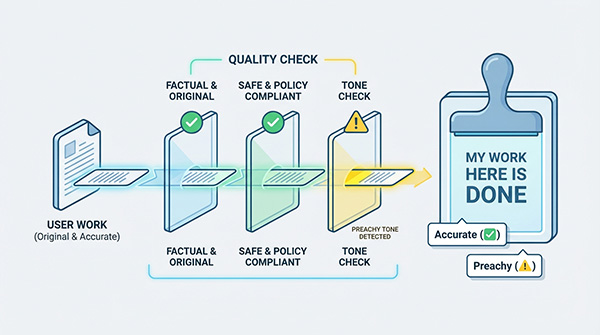
The phrase “my work here is done” is an idiomatic expression used to indicate that one has completed a task or achieved a goal in a particular situation or place. It often carries a tone of satisfaction, finality, or even a touch of humor. Grammatically, it is a declarative sentence that employs the present perfect tense in the passive voice. Understanding the components of this phrase is essential to grasping its meaning and usage.
The core elements of the phrase include:
- “My work”: Refers to the task, effort, or activity that has been undertaken.
- “Here”: Denotes the specific location or context where the work was performed.
- “Is done”: Uses the present perfect passive voice to indicate that the work has been completed and its effects are relevant to the present moment. The use of “is” rather than “was” emphasizes the present relevance of the completed action..
The phrase functions as a statement of completion, often implying a sense of accomplishment or readiness to move on. It can be used in various contexts, ranging from serious to humorous, depending on the situation and the speaker’s intent.
Structural Breakdown
To fully understand the phrase “my work here is done,” it’s important to break down its structural components and analyze how they contribute to its overall meaning.
- Possessive Pronoun: “My” indicates ownership or association with the speaker. It specifies that the work being referred to is the speaker’s own effort.
- Noun: “Work” represents the task, effort, or activity that has been performed. It can refer to a specific job, a project, or any form of endeavor.
- Adverb: “Here” specifies the location or context in which the work was carried out. It grounds the statement in a particular place or situation.
- Verb Phrase: “Is done” is the core of the sentence’s meaning. “Is” is a form of the verb “to be”, and “done” is the past participle of the verb “do.” Together they form the present perfect passive, indicating that the work has been completed.
The structure of the phrase follows a subject-complement pattern, where “my work here” acts as the subject and “is done” serves as the complement, completing the meaning of the sentence. The passive voice emphasizes the completed action rather than the actor, focusing on the result and its present relevance.
Tense and Aspect
The tense and aspect of “my work here is done” are crucial to its meaning. The phrase uses the present perfect passive tense, which has specific implications for how the action is viewed in relation to time.
Present Perfect Passive:
- Present Perfect: Connects a past action to the present. It indicates that the action has been completed at some point in the past, and its effects are still relevant or noticeable now.
- Passive Voice: Focuses on the action rather than the actor. In this case, it emphasizes the completion of the work rather than who performed it.
The present perfect passive is formed using the auxiliary verb “to be” in the present tense (“is”) followed by the past participle of the main verb (“done”). This construction highlights the state of completion and its current relevance. For example, if someone says, “My work here is done” after finishing a project, it means the project is now complete, and this completion has implications for the present situation, such as being ready to move on to the next task.
In addition to the standard idiom, other expressions provide nuance and stylistic variety. Saying i can see my work here is done emphasizes a reflective realization of task completion. In more conversational or narrative contexts, my work here is done saying can signal the conclusion of commentary or instructions.
Similarly, i have done my mission here highlights the successful fulfillment of a specific goal or duty, often carrying a sense of purpose or achievement. Incorporating these alternatives can enrich communication and allow for subtle shifts in tone, from humorous to serious or reflective.
Idiomatic Usage and Context
While the phrase “my work here is done” has a clear grammatical structure, its primary use is idiomatic. This means that its meaning goes beyond the literal interpretation of its individual words. The phrase is often used to express a sense of:
- Completion: Indicating that a task or goal has been successfully achieved.
- Satisfaction: Conveying a feeling of accomplishment and contentment.
- Finality: Suggesting that the speaker is ready to move on to something else.
- Humor: Adding a lighthearted or ironic tone to the situation.
The context in which the phrase is used significantly influences its meaning and impact. For example, saying “my work here is done” after completing a challenging project can express genuine satisfaction and accomplishment. In contrast, saying it sarcastically after doing a minimal amount of work can convey irony or dissatisfaction.
The phrase is versatile and can be adapted to various situations, but it’s important to consider the audience and the tone you want to convey. Overusing the phrase or using it in inappropriate contexts can diminish its impact or even come across as insincere.
Examples
To illustrate the usage of “my work here is done,” let’s explore various examples categorized by different contexts and tones.
General Examples
These examples demonstrate the straightforward use of the phrase to indicate completion and readiness to move on.
The following table contains several examples of the phrase “My work here is done” used in general contexts. These examples demonstrate the phrase’s basic meaning of completion and readiness to move on.
| Example | Context |
|---|---|
| After submitting the final report, she said, “My work here is done.” | Completing a project at work. |
| Once the last guest had left, he sighed, “My work here is done.” | Finishing the duties of hosting a party. |
| With the presentation delivered and the questions answered, she announced, “My work here is done.” | Completing a presentation. |
| Having finished grading all the exams, the professor smiled and said, “My work here is done.” | Completing a grading task. |
| After cleaning the entire house, she declared, “My work here is done.” | Finishing housework. |
| Once the website was fully launched and tested, the developer stated, “My work here is done.” | Completing a website development project. |
| With the garden fully planted and watered, he remarked, “My work here is done.” | Finishing gardening tasks. |
| After successfully negotiating the contract, the lawyer announced, “My work here is done.” | Completing a negotiation. |
| With the training session concluded, the instructor said, “My work here is done.” | Finishing a training session. |
| Having completed the painting, the artist stepped back and said, “My work here is done.” | Completing an art project. |
| Once the dishes were washed and put away, she announced, “My work here is done.” | Finishing kitchen chores. |
| After fixing the car, the mechanic wiped his hands and said, “My work here is done.” | Completing a repair job. |
| With the book finally edited and ready for publication, she exclaimed, “My work here is done!” | Finishing an editing task. |
| Once the budget was finalized and approved, the accountant declared, “My work here is done.” | Completing financial planning. |
| After the event was successfully organized and executed, the planner sighed, “My work here is done.” | Completing event planning. |
| With the research completed and the data analyzed, the scientist announced, “My work here is done.” | Completing scientific research. |
| Once the article was written and submitted, the journalist said, “My work here is done.” | Finishing a writing assignment. |
| After the software update was deployed and tested, the engineer said with satisfaction, “My work here is done.” | Completing a software deployment. |
| Having mentored the new employee through their first project, she said, “My work here is done.” | Completing a mentorship role. |
| Once the campaign strategy was fully developed and presented, the marketing director announced, “My work here is done.” | Finishing a marketing strategy. |
| With the audit completed and the report submitted, the auditor stated, “My work here is done.” | Completing an audit. |
| After resolving the customer’s issue, the support agent said, “My work here is done.” | Completing customer support. |
| Once the legal documents were drafted and filed, the paralegal announced, “My work here is done.” | Finishing legal documentation. |
| Having completed the training module, the student exclaimed, “My work here is done!” | Finishing a training module. |
Humorous Examples
In humorous contexts, the phrase is often used ironically or playfully to exaggerate the importance of a simple task.
The following table provides examples where “My work here is done” is used humorously, often to exaggerate the significance of a simple or trivial task.
| Example | Context |
|---|---|
| After changing the TV channel, he dramatically announced, “My work here is done.” | Changing a TV channel. |
| She placed the last napkin on the table and declared, “My work here is done!” | Setting the table. |
| After successfully opening a jar of pickles, he proclaimed, “My work here is done.” | Opening a jar. |
| Having found the remote control, she proudly stated, “My work here is done.” | Finding the remote. |
| He finished his cup of coffee and said with a flourish, “My work here is done.” | Finishing a cup of coffee. |
| After finally untangling the headphones, she sighed, “My work here is done.” | Untangling headphones. |
| Having successfully parallel parked, he declared, “My work here is done!” | Parallel parking. |
| She watered the single potted plant and announced, “My work here is done.” | Watering a plant. |
| After hitting ‘send’ on an email, he dramatically said, “My work here is done.” | Sending an email. |
| Having located his missing sock, he triumphantly declared, “My work here is done.” | Finding a sock. |
| She put the pen back in the holder and stated, “My work here is done.” | Putting a pen away. |
| After pressing the elevator button, he announced, “My work here is done.” | Pressing an elevator button. |
| Having successfully microwaved a burrito, she announced, “My work here is done!” | Microwaving food. |
| He put the shopping cart back in its place and said, “My work here is done.” | Returning a shopping cart. |
| She closed the lid on the Tupperware container and proclaimed, “My work here is done.” | Closing a container. |
| After turning off the light switch, he dramatically announced, “My work here is done.” | Turning off a light. |
| Having paid the parking meter, she declared, “My work here is done!” | Paying a parking meter. |
| He put the book back on the shelf and stated, “My work here is done.” | Returning a book. |
| After successfully setting an alarm, she announced, “My work here is done.” | Setting an alarm. |
| Having successfully brewed a pot of coffee, he exclaimed, “My work here is done!” | Brewing coffee. |
| She refilled the water cooler and declared, “My work here is done.” | Refilling a water cooler. |
| After stacking the magazines neatly, he said with a flourish, “My work here is done.” | Stacking magazines. |
| Having successfully downloaded a file, she announced, “My work here is done!” | Downloading a file. |
Serious Examples
In more serious contexts, the phrase can indicate a significant accomplishment or the completion of a major task.
The table below contains examples of “My work here is done” used in serious contexts, indicating significant accomplishments or the completion of major tasks.
| Example | Context |
|---|---|
| After years of dedication, the doctor announced, “My work here is done,” as he retired from the hospital. | Retiring from a long career. |
| Following the successful negotiation of the peace treaty, the diplomat stated, “My work here is done.” | Achieving a diplomatic resolution. |
| With the new school built and the children settled, the philanthropist declared, “My work here is done.” | Completing a philanthropic project. |
| After guiding the company through a major crisis, the CEO announced, “My work here is done,” and stepped down. | Leading a company through a crisis. |
| Having solved the complex scientific problem, the researcher stated, “My work here is done.” | Solving a complex problem. |
| After dedicating her life to social justice, the activist announced, “My work here is done,” as she passed the torch to the next generation. | Completing a life’s work. |
| With the bridge finally completed and open to traffic, the engineer proudly stated, “My work here is done.” | Completing a major construction project. |
| Having successfully defended her client in court, the lawyer announced, “My work here is done.” | Winning a court case. |
| After mentoring countless students, the teacher announced, “My work here is done,” as she retired. | Retiring after a long teaching career. |
| With the city rebuilt after the disaster, the mayor declared, “My work here is done.” | Rebuilding a city after a disaster. |
| After years of fighting for environmental protection, the advocate stated, “My work here is done.” | Completing environmental advocacy. |
| Having secured funding for the new research center, the scientist announced, “My work here is done.” | Securing funding for research. |
| With the healthcare system reformed, the politician stated, “My work here is done.” | Reforming a healthcare system. |
| After successfully launching the satellite into orbit, the engineer declared, “My work here is done.” | Launching a satellite. |
| Having trained the new team to take over, the manager announced, “My work here is done.” | Training a new team. |
| With the museum’s collection fully restored, the curator stated, “My work here is done.” | Restoring a museum collection. |
| After ensuring the company’s financial stability, the CFO announced, “My work here is done.” | Ensuring financial stability. |
| Having established a successful charity, the founder stated, “My work here is done.” | Establishing a charity. |
| With the new law passed, the legislator announced, “My work here is done.” | Passing a new law. |
| After successfully negotiating the international trade agreement, the negotiator stated, “My work here is done.” | Negotiating a trade agreement. |
Sarcastic Examples
The phrase can also be used sarcastically to imply that the work was either minimal or poorly done.
The following table contains examples of the phrase “My work here is done” used sarcastically to suggest that the work was either minimal, of poor quality, or incomplete.
| Example | Context |
|---|---|
| After only half-heartedly sweeping the floor, he said, “My work here is done.” | Doing a poor job sweeping. |
| She scribbled a few notes and announced, “My work here is done,” before leaving the meeting. | Making minimal contributions. |
| Having fixed the leaky faucet with duct tape, he declared, “My work here is done.” | Providing a temporary fix. |
| He rearranged the papers on his desk and stated, “My work here is done,” avoiding actual work. | Avoiding work. |
| She glanced at the report and said, “My work here is done,” without actually reading it. | Not reading a report. |
| After only partially cleaning the kitchen, he announced, “My work here is done.” | Partially cleaning. |
| Having tightened one screw on the wobbly chair, she declared, “My work here is done!” | Doing a minimal repair. |
| He submitted a draft full of errors and said, “My work here is done,” with a shrug. | Submitting a poor draft. |
| She made a single phone call and announced, “My work here is done,” avoiding further tasks. | Avoiding tasks. |
| Having only skimmed the manual, he stated, “My work here is done,” before attempting the repair. | Skimming a manual. |
| He filed the documents in the wrong folder and said, “My work here is done,” without checking. | Filing incorrectly. |
| She added a single line of code and announced, “My work here is done,” ignoring the rest of the project. | Ignoring the project. |
| After making a vague suggestion, he declared, “My work here is done,” and sat back. | Making a vague suggestion. |
| Having only addressed one minor issue, she stated, “My work here is done,” ignoring the larger problems. | Ignoring larger problems. |
| He quickly scanned the article and said, “My work here is done,” without understanding the content. | Not understanding the content. |
| She attended the meeting but remained silent, then announced, “My work here is done.” | Remaining silent. |
| After only checking one item on the list, he declared, “My work here is done,” skipping the rest. | Skipping the rest. |
| Having only tested one feature of the software, she said, “My work here is done,” ignoring the others. | Ignoring the others. |
| He wrote a short, unhelpful email and announced, “My work here is done,” avoiding further assistance. | Avoiding assistance. |
| She only updated one slide in the presentation and announced, “My work here is done,” avoiding more work. | Avoiding more work. |
Variations and Similar Expressions
Exploring variations and similar expressions can help broaden your understanding and usage of this concept.
The table below explores variations of the phrase “My work here is done” and similar expressions that convey a sense of completion or readiness to move on.
| Phrase | Meaning | Example |
|---|---|---|
| “My task is complete.” | Indicates that the assigned duty has been finished. | Having submitted the final design, she said, “My task is complete.” |
| “I’m finished here.” | Signals the end of one’s involvement in a particular place or activity. | After packing his belongings, he said, “I’m finished here,” and left the office. |
| “I’ve done what I came to do.” | Emphasizes the accomplishment of a specific purpose. | Having delivered the speech, she said, “I’ve done what I came to do.” |
| “That’s a wrap.” | Informal expression indicating the end of a session or project. | “That’s a wrap,” the director announced after the final scene was filmed. |
| “Mission accomplished.” | Highlights the successful completion of a mission or goal. | After reaching the summit, the climber radioed, “Mission accomplished.” |
| “I’m through.” | Indicates that one has finished a particular task or phase. | “I’m through with this project,” he said, closing the file. |
| “All done.” | A simple and informal way to indicate completion. | “All done,” she said, putting away the last of the groceries. |
| “That concludes my work.” | A formal way of stating that one’s tasks are finished. | “That concludes my work on this case,” the detective announced. |
| “I have completed my duties.” | A formal way of declaring the completion of assigned responsibilities. | Having submitted the report, the officer stated, “I have completed my duties.” |
| “My contribution is complete.” | Highlights the completion of one’s part in a collaborative effort. | After adding the final touches, the artist said, “My contribution is complete.” |
| “I’ve reached the end.” | Indicates the completion of a process or journey. | “I’ve reached the end of this chapter,” she said, closing the book. |
| “I’m signing off.” | Indicates the end of one’s involvement, often in a broadcast or online context. | “I’m signing off now,” the radio host announced. |
| “The end of the line.” | Indicates the conclusion of a task or project. | “This is the end of the line for this project,” the manager announced. |
Usage Rules
To use “my work here is done” correctly, keep the following rules in mind:
- Context Matters: Consider the situation and your audience. The phrase can be humorous, serious, or sarcastic, depending on the context.
- Tone: Be mindful of the tone you want to convey. Ensure that your tone aligns with the situation and your intent.
- Appropriateness: Avoid using the phrase in overly formal or sensitive situations where it might be perceived as inappropriate.
- Overuse: Don’t overuse the phrase, as it can lose its impact and become repetitive.
- Grammatical Accuracy: Ensure that the phrase is grammatically correct, using the present perfect passive tense appropriately.
Common Mistakes
Here are some common mistakes to avoid when using “my work here is done”:
| Incorrect | Correct | Explanation |
|---|---|---|
| My work here was done. | My work here *is* done. | The phrase uses the present perfect, indicating ongoing relevance. |
| My works here are done. | My work here *is* done. | “Work” is typically uncountable in this context. |
| I am done my work here. | My work here *is* done. | The structure of the idiom should be maintained. |
| My job here is done yesterday. | My work here *is* done. | Do not add a time reference. The present perfect implies a connection to the present. |
| My duty here is done. | My work here *is* done. | While “duty” is similar, “work” is the standard term in this idiom. |
Practice Exercises
Test your understanding with these practice exercises.
Exercise 1: Fill in the Blanks
Fill in the blanks with the correct form of the phrase “my work here is done.”
Instructions: Complete each sentence with the correct form of the phrase, ensuring it fits the context appropriately.
| Question | Answer |
|---|---|
| After finishing the presentation, she smiled and said, “_________.” | My work here is done. |
| Once the last guest had left, he sighed, “_________.” | My work here is done. |
| With the project finally completed, the team leader announced, “_________.” | My work here is done. |
| After cleaning the entire house, she proudly declared, “_________.” | My work here is done. |
| Having successfully negotiated the contract, the lawyer stated, “_________.” | My work here is done. |
| He finished his cup of coffee and dramatically announced, “_________.” | My work here is done. |
| After finding the missing file, she triumphantly declared, “_________.” | My work here is done. |
| With the website fully launched, the developer announced, “_________.” | My work here is done. |
| Having mentored the new employee, she said, “_________.” | My work here is done. |
| After successfully resolving the customer’s issue, the support agent said, “_________.” | My work here is done. |
Exercise 2: Sentence Transformation
Rewrite the following sentences using the phrase “my work here is done.”
Instructions: Transform each sentence to include the phrase “my work here is done,” maintaining the original meaning and context.
| Original Sentence | Transformed Sentence |
|---|---|
| She has finished the report and is ready to move on. | Having finished the report, she said, “My work here is done.” |
| He completed the project and now can relax. | With the project completed, he declared, “My work here is done.” |
| They successfully organized the event and are now finished. | Having successfully organized the event, they announced, “My work here is done.” |
| The task is complete, and I can now leave. | Since the task is complete, I can say, “My work here is done.” |
| She has fulfilled her responsibilities and is ready to depart. | Having fulfilled her responsibilities, she announced, “My work here is done.” |
| He wrapped up the presentation and is now done. | After wrapping up the presentation, he said, “My work here is done.” |
| They have finalized the agreement and can now proceed. | Having finalized the agreement, they stated, “My work here is done.” |
| The job is finished, and I am now free. | With the job finished, I can say, “My work here is done.” |
| She concluded her assignment and is now ready for the next one. | Having concluded her assignment, she announced, “My work here is done.” |
| He accomplished his goal and can now celebrate. | After accomplishing his goal, he declared, “My work here is done.” |
Exercise 3: Contextual Usage
Create a short dialogue or paragraph using “my work here is done” in the given context.
Instructions: Write a short dialogue or paragraph for each scenario, incorporating the phrase “my work here is done” in a way that fits the context and tone.
| Context | Example | |
|---|---|---|
| A teacher retiring after many years. | Mr. Thompson smiled at his students on the last day of school. “After all these years, helping you all grow and learn, I can finally say, ‘My work here is done.’ It’s time for me to pass the torch.” | |
| A detective solving a difficult case. | Detective Reynolds stared at the evidence board, a satisfied look on his face. “After months of chasing leads and piecing together clues, the truth is finally out. My work here is done,” he muttered, closing the case file. | |
| A programmer finishing a major software update. | “Finally!” exclaimed Sarah, leaning back in her chair. “The new update is live, and all the bugs are squashed. My work here is done… time for a well-deserved break.” | |
| A volunteer helping after a natural disaster. | After weeks of distributing supplies and helping families rebuild, Maria looked around at the recovering community. “It’s been tough, but seeing everyone come together gives me hope. For now, my work here is done, but I’ll be back if they need me.” | |
| A chef creating a perfect meal. | Chef Antoine carefully plated the final dish, a masterpiece of flavors and textures. He stepped back, admiring his creation. “Voilà! The sauce is perfect, the presentation impeccable. My work here is done,” he declared with a flourish. | |
| A construction worker completing a skyscraper. | Standing atop the newly finished skyscraper, | The foreman gazed out at the city below. “Years of planning, thousands of workers, and countless hours. But now, looking at this magnificent structure, I can proudly say, ‘My work here is done.'” |
Advanced Topics
Explore more complex aspects of the phrase “my work here is done.”
Advanced Tense Considerations
While “my work here is done” uses the present perfect tense, understanding how it relates to other tenses can provide a deeper insight into its usage.
- Simple Past vs. Present Perfect: The simple past (“my work here was done”) indicates that the action was completed at a specific time in the past and has no direct connection to the present. In contrast, the present perfect (“my work here is done”) implies that the completion of the work has relevance or consequences in the present.
- Future Perfect: The future perfect (“my work here will be done”) indicates that the work will be completed at some point in the future. This tense is used to project a future state of completion.
Understanding these nuances allows for more precise and contextually appropriate usage of the phrase.
Related Idioms
Exploring related idioms can enrich your understanding and ability to express similar ideas in different ways.
- “That’s all she wrote”: This idiom signifies the end of something, often with a sense of finality.
- “Case closed”: Used to indicate that a matter has been resolved or completed.
- “Finished and done”: Emphasizes the finality of a completed task.
- “The end of the road”: Signifies the conclusion of a journey or project.
These idioms offer alternative ways to express completion and can be used to add variety to your communication.
Frequently Asked Questions (FAQ)
Find answers to common questions about the phrase “my work here is done.”
When is it appropriate to use “my work here is done”?
It is appropriate to use “my work here is done” when you have completed a task, project, or duty in a particular context and want to express a sense of completion, satisfaction, or readiness to move on. The tone can range from serious to humorous, depending on the situation.
Can I use “my work here is done” in formal settings?
While the phrase is versatile, it is generally more suitable for informal or semi-formal settings. In highly formal situations, it may be better to use more professional language, such as “I have completed my assigned tasks” or “My responsibilities have been fulfilled.”
What are some alternatives to “my work here is done”?
Some alternatives include “My task is complete,” “I’m finished here,” “Mission accomplished,” and “I’ve done what I came to do.” The best alternative will depend on the specific context and the tone you want to convey.
Is it grammatically correct to say “my work here was done”?
While grammatically correct, “my work here *was* done” implies that the work was completed at a specific time in the past and has no direct connection to the present. “My work here *is* done” is the more common and idiomatic phrasing, as it connects the past action to the present.
Can I use “my work here is done” sarcastically?
Yes, “my work here is done” can be used sarcastically to imply that the work was either minimal or poorly done. The tone and context will indicate the sarcastic intent.
Conclusion
The phrase “my work here is done” is a versatile and idiomatic expression that signifies completion, satisfaction, and readiness to move on. By understanding its grammatical structure, idiomatic usage, and appropriate contexts, you can effectively incorporate it into your communication. Whether used seriously, humorously, or sarcastically, this phrase adds depth and nuance to your expression, making you a more confident and articulate communicator. Practice the exercises provided and be mindful of the usage rules to master this common and useful idiom.