

Metaphors are powerful tools that shape our understanding of abstract concepts, and knowledge is no exception. How we talk about knowledge—acquiring it, possessing it, and sharing it—often relies on figurative language.
Understanding these metaphors not only enhances our grasp of the English language but also provides insights into how we conceptualize learning and intellectual growth. This article explores the common metaphors used to describe knowledge, their structural elements, usage rules, and potential pitfalls.
This comprehensive guide is designed for English language learners, educators, and anyone interested in the fascinating interplay between language and cognition.
Table of Contents
- Introduction
- Definition of Knowledge Metaphors
- Structural Breakdown of Knowledge Metaphors
- Types of Knowledge Metaphors
- Examples of Knowledge Metaphors
- Usage Rules for Knowledge Metaphors
- Common Mistakes with Knowledge Metaphors
- Practice Exercises
- Advanced Topics in Knowledge Metaphors
- Frequently Asked Questions
- Conclusion
Definition of Knowledge Metaphors
A knowledge metaphor is a figure of speech that uses an image, activity, or concept from one domain to describe and explain the abstract concept of knowledge. These metaphors provide a framework for understanding how we acquire, store, and use information.
They influence our attitudes towards learning and shape the way we communicate about intellectual pursuits. Metaphors aren’t just stylistic devices; they are fundamental cognitive tools that structure our thinking.
Knowledge metaphors function by mapping characteristics from a concrete source domain (e.g., possession, building) onto the target domain of knowledge. This mapping highlights certain aspects of knowledge while obscuring others.
For example, the metaphor “knowledge is power” emphasizes the enabling and controlling aspects of knowledge but downplays its potential for personal growth or collaborative understanding. The effectiveness of a knowledge metaphor lies in its ability to resonate with our experiences and intuitions, making the abstract concept of knowledge more accessible and relatable.
The context in which a knowledge metaphor is used significantly affects its interpretation. A metaphor used in an academic paper might carry a different connotation than the same metaphor used in everyday conversation.
Cultural background also plays a role, as certain metaphors may be more prevalent or meaningful in specific cultures. Recognizing the context-dependent nature of knowledge metaphors is crucial for accurate interpretation and effective communication.
Structural Breakdown of Knowledge Metaphors
Knowledge metaphors, like all metaphors, consist of two primary components: the source domain and the target domain. The source domain is the concrete concept or image used to represent knowledge, while the target domain is knowledge itself. The metaphor works by establishing a relationship between these two domains, transferring characteristics from the source to the target.
The structure of a knowledge metaphor can be analyzed in terms of its mapping. This involves identifying the specific attributes of the source domain that are being applied to knowledge. For instance, in the metaphor “knowledge is a treasure,” the attributes of treasure—value, rarity, and the effort required to obtain it—are mapped onto knowledge, emphasizing its importance and the dedication needed to acquire it. The strength of the metaphor depends on the clarity and coherence of this mapping.
Furthermore, knowledge metaphors often involve entailments, which are the logical consequences or implications of the metaphor. If knowledge is a building, then learning becomes the process of constructing that building, brick by brick. Entailments can shape our understanding of related concepts and influence our actions. For example, if we view knowledge as a building, we might prioritize a strong foundation of basic concepts before moving on to more advanced topics.
Types of Knowledge Metaphors
Knowledge as Possession
This is one of the most common and intuitive metaphors. It frames knowledge as something that can be owned, acquired, and stored.
Terms like “having knowledge,” “lacking knowledge,” and “knowledge base” reflect this metaphor. It emphasizes the individual’s role in accumulating and controlling information.
However, the “knowledge as possession” metaphor can also have negative implications. It may lead to a hoarding mentality, where individuals are reluctant to share their knowledge for fear of diminishing their own intellectual wealth.
It can also create a sense of competition and exclusivity, hindering collaborative learning and open access to information.
Knowledge as Building
This metaphor portrays knowledge as a structure that is constructed over time, with each new piece of information building upon previous knowledge. Terms like “foundation,” “framework,” and “scaffolding” are commonly used in this context.
It highlights the importance of a solid base of understanding and the gradual process of learning. Educators often use this metaphor to emphasize the need for sequential instruction and the importance of mastering basic concepts before moving on to more complex topics.
The “knowledge as building” metaphor also emphasizes the importance of organization and structure. Just as a well-designed building requires careful planning and precise execution, effective learning requires a systematic approach and a clear understanding of the relationships between different concepts.
This metaphor encourages learners to think critically about the structure of their knowledge and to identify any gaps or weaknesses in their understanding.
Knowledge as Light
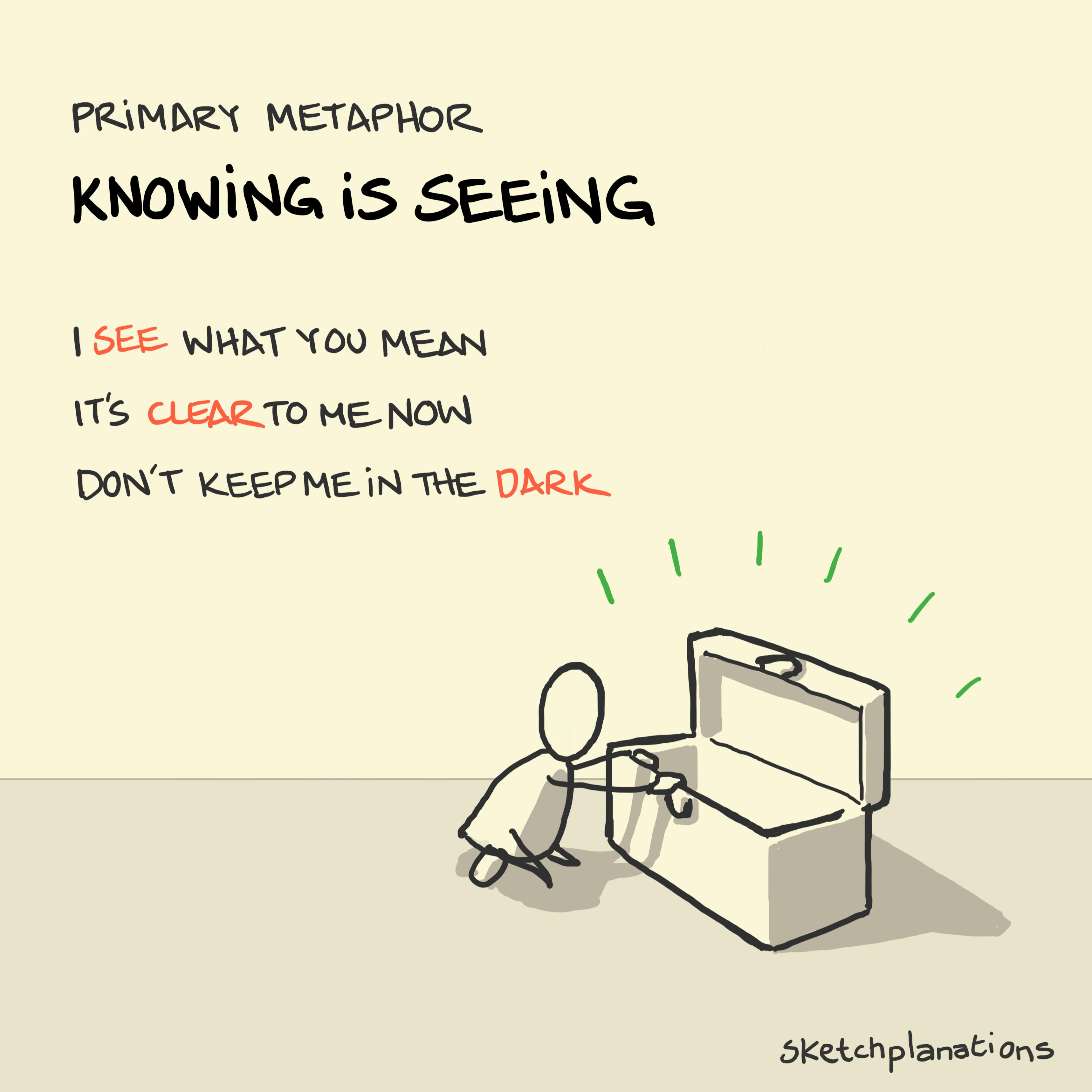
This metaphor associates knowledge with illumination, clarity, and understanding. Terms like “enlightenment,” “illumination,” and “shedding light” are used to describe the process of gaining knowledge.
It emphasizes the transformative power of knowledge and its ability to dispel ignorance and confusion. This metaphor is often used in philosophical and spiritual contexts to describe the pursuit of wisdom and truth.
The “knowledge as light” metaphor can also inspire a sense of hope and optimism. It suggests that through learning and inquiry, we can overcome darkness and uncertainty and find our way to a brighter future.
This metaphor encourages learners to embrace curiosity and to seek out new knowledge as a means of personal and societal progress.
Knowledge as Nourishment
This metaphor compares knowledge to food, emphasizing its role in sustaining and nurturing the mind. Terms like “food for thought,” “digesting information,” and “intellectual diet” are used to describe the process of learning and understanding.
It highlights the importance of consuming a balanced and varied diet of information to promote intellectual growth and well-being.
The “knowledge as nourishment” metaphor also suggests that we should be selective about the information we consume. Just as a poor diet can lead to physical health problems, a diet of misinformation or superficial knowledge can hinder intellectual development.
This metaphor encourages learners to be critical consumers of information and to seek out reliable and nutritious sources of knowledge.
Knowledge as Landscape
This metaphor presents knowledge as a terrain that can be explored, mapped, and navigated. Terms like “field of study,” “uncharted territory,” and “intellectual journey” are used to describe the process of learning and discovery.
It emphasizes the vastness and complexity of knowledge and the importance of exploration and experimentation. This metaphor encourages learners to be adventurous and to venture beyond their comfort zones in pursuit of new knowledge.
The landscape metaphor also highlights the importance of perspective. Just as a landscape can look different from different vantage points, knowledge can be understood in different ways depending on one’s background and experience.
This metaphor encourages learners to consider multiple perspectives and to appreciate the diversity of human knowledge.
Examples of Knowledge Metaphors
Here are several tables illustrating different types of knowledge metaphors with various examples. Each table focuses on a specific metaphor category and provides a range of sentences demonstrating its usage.
Table 1: Knowledge as Possession
This table provides examples of the “Knowledge as Possession” metaphor. This metaphor is commonly used in everyday language to describe how we acquire, store, and utilize information.
| Example Sentence | Explanation |
|---|---|
| “She has a vast store of knowledge about ancient history.” | Knowledge is treated as a commodity that can be accumulated and stored. |
| “He possesses a deep understanding of quantum physics.” | Knowledge is presented as something owned and controlled by the individual. |
| “I’m trying to acquire more knowledge in the field of data science.” | Learning is framed as the act of obtaining possession of new information. |
| “The library is a treasure trove of knowledge.” | Knowledge is likened to valuable possessions found in a secure place. |
| “He lost his knowledge of Spanish after years of disuse.” | Knowledge is something that can be lost if not maintained. |
| “She shared her knowledge with her colleagues.” | Knowledge is treated as something that can be given away or distributed. |
| “That information is proprietary knowledge.” | Knowledge is considered a valuable asset to be protected. |
| “He hoards knowledge and refuses to share it.” | Knowledge is viewed as a possession to be kept for oneself. |
| “She inherited a wealth of knowledge from her grandfather.” | Knowledge is something that can be passed down through generations. |
| “The company’s knowledge base is its most valuable asset.” | Knowledge is seen as a resource that contributes to the company’s value. |
| “I need to brush up on my knowledge of grammar.” | Knowledge is something that can become rusty and needs to be maintained. |
| “He has a firm grasp of the subject matter.” | Knowledge is something that can be held tightly. |
| “She has a comprehensive knowledge of the law.” | Knowledge is something that can be all-encompassing. |
| “He is a repository of knowledge.” | Knowledge is something that can be stored within a person, like a container. |
| “She is rich in experience and knowledge.” | Knowledge is a form of wealth. |
| “He is lacking in basic knowledge.” | Knowledge is something that can be absent. |
| “She gained knowledge through years of study.” | Knowledge is something that can be acquired through effort. |
| “He has a monopoly on the knowledge in that field.” | Knowledge is treated as a resource that can be controlled. |
| “She is armed with the knowledge to succeed.” | Knowledge is a tool for achieving goals. |
| “He has a vast collection of books and knowledge.” | Knowledge is something that can be collected and accumulated. |
| “She endowed the university with a fund for knowledge.” | Knowledge is something that can be invested in and supported. |
| “He secured his knowledge with rigorous research.” | Knowledge is something that can be protected and reinforced. |
| “She is guarding her knowledge jealously.” | Knowledge is a possession to be protected from others. |
| “He is building up his knowledge in preparation for the exam.” | Knowledge is something that can be accumulated in advance. |
Table 2: Knowledge as Building
This table illustrates examples of the “Knowledge as Building” metaphor, which emphasizes the progressive and structured nature of learning.
| Example Sentence | Explanation |
|---|---|
| “We need to lay the foundation for understanding calculus.” | Learning is seen as constructing a building, starting with a base. |
| “Her knowledge of physics is built on a strong framework of mathematics.” | Knowledge is structured like a building, with interconnected components. |
| “The course will help you construct a solid understanding of the topic.” | Learning is the process of building a stable structure of knowledge. |
| “He is adding new layers to his knowledge of art history.” | Knowledge is built up in stages, like adding layers to a building. |
| “We need to reinforce the foundations of their understanding.” | Strengthening the basics is crucial for a stable structure of knowledge. |
| “The teacher is scaffolding the lesson to help students build their knowledge.” | Providing support to help students construct their understanding. |
| “His argument was based on shaky foundations.” | His knowledge lacked a solid base. |
| “She is dismantling the old theories to make room for new ones.” | Outdated knowledge is being removed to create space for new information. |
| “The course provides the building blocks for a career in engineering.” | The course provides the fundamental elements needed to construct a career. |
| “We need to bridge the gap in their knowledge.” | Connecting different areas of knowledge to create a complete structure. |
| “He is constructing a comprehensive theory of everything.” | Knowledge is being built into a complete and unified structure. |
| “She is laying the groundwork for future research.” | Establishing the basic elements for future development. |
| “The seminar will help you erect a strong understanding of the subject.” | Learning is the process of building a stable and robust structure of knowledge. |
| “He is reinforcing the pillars of his argument.” | Strengthening the key supporting elements of his reasoning. |
| “She is adding new wings to her understanding of the world.” | Expanding her knowledge into new areas and perspectives. |
| “His knowledge is a towering edifice of learning.” | His knowledge is an impressive and complex structure of information. |
| “We need to shore up the weaknesses in their understanding.” | Strengthening the areas where knowledge is lacking or incomplete. |
| “He is constructing a framework for analyzing complex data.” | Creating a structure to organize and interpret information. |
| “She is building bridges between different disciplines.” | Connecting different fields of knowledge to create interdisciplinary understanding. |
| “The course provides a solid foundation for advanced study.” | The course provides a strong basis for further learning. |
| “He is erecting a monument to human knowledge.” | Creating a lasting tribute to the achievements of human learning. |
| “She is laying the cornerstone of a new era in science.” | Establishing the foundational element for a new period of scientific progress. |
| “We need to construct a clear and coherent understanding of the issue.” | Building a well-organized and logical framework of knowledge. |
Table 3: Knowledge as Light
This table presents examples of the “Knowledge as Light” metaphor, which emphasizes the illuminating and clarifying aspects of learning.
| Example Sentence | Explanation |
|---|---|
| “Education is the light that dispels the darkness of ignorance.” | Knowledge is seen as a source of illumination that overcomes ignorance. |
| “The lecture shed light on the complexities of the subject.” | The lecture clarified and illuminated difficult aspects of the topic. |
| “He sought enlightenment through years of study.” | Knowledge is the path to understanding and wisdom. |
| “Her insights illuminated the path forward.” | Her knowledge clarified the way to proceed. |
| “The discovery cast a new light on the problem.” | The discovery provided a new perspective and understanding of the issue. |
| “He is a guiding light in the field of astrophysics.” | He is a source of knowledge and guidance in the field. |
| “The truth dawned on him.” | He suddenly understood something clearly. |
| “She unveiled the secrets of the universe.” | She revealed hidden knowledge. |
| “The professor illuminated the minds of his students.” | The professor enlightened and educated his students. |
| “His explanation clarified the situation.” | His explanation made the situation clear and understandable. |
| “She shone a light on the problem.” | She brought attention and clarity to the issue. |
| “He is trying to shed light on the truth.” | He is trying to reveal and clarify the truth. |
| “The book is an illuminating guide to the subject.” | The book provides clear and insightful information. |
| “Her wisdom is a beacon of light in a dark world.” | Her wisdom provides guidance and hope in difficult times. |
| “The answer became clear as day.” | The answer became obvious and easily understandable. |
| “He is searching for the light of knowledge.” | He is seeking understanding and enlightenment. |
| “She is trying to bring the issue to light.” | She is trying to make the issue known and understood. |
| “His ideas sparked a new light in the field.” | His ideas brought a new perspective and understanding to the field. |
| “The evidence brought the truth to light.” | The evidence revealed and clarified the truth. |
| “She is trying to throw light on the matter.” | She is trying to provide clarity and understanding to the issue. |
| “His research illuminated the obscure corners of the topic.” | His research clarified and revealed the hidden aspects of the topic. |
| “She is a shining example of intellectual curiosity.” | She is a clear and inspiring demonstration of intellectual curiosity. |
| “The lecture was an eye-opening experience.” | The lecture provided new insights and understanding. |
Table 4: Knowledge as Nourishment
This table exemplifies the “Knowledge as Nourishment” metaphor, which links learning with the idea of feeding and nurturing the mind.
| Example Sentence | Explanation |
|---|---|
| “The lecture was food for thought.” | The lecture provided stimulating ideas to consider. |
| “She needs to digest the information before she can answer the question.” | She needs to process and understand the information thoroughly. |
| “His mind is starved of intellectual stimulation.” | He lacks opportunities for learning and intellectual growth. |
| “The seminar provided a rich intellectual diet.” | The seminar offered a variety of stimulating and nourishing ideas. |
| “He is hungry for knowledge.” | He has a strong desire to learn and understand. |
| “She is feeding her mind with new ideas.” | She is actively seeking and absorbing new information. |
| “The course is designed to nourish the intellect.” | The course is intended to stimulate and develop the mind. |
| “He is consuming vast amounts of information.” | He is taking in a large quantity of data. |
| “She needs to chew on that idea for a while.” | She needs to think about the idea carefully and thoroughly. |
| “The book is a feast of information.” | The book provides an abundance of valuable knowledge. |
| “He is savoring the intellectual challenge.” | He is enjoying the stimulating and engaging task. |
| “She is thirsting for knowledge.” | She has a strong desire to learn and understand. |
| “The lecture was a nourishing experience.” | The lecture provided valuable and enriching information. |
| “He is cultivating his intellectual garden.” | He is nurturing and developing his mind through learning. |
| “She is gathering the fruits of her labor.” | She is reaping the rewards of her hard work and study. |
| “The information was hard to swallow.” | The information was difficult to accept or understand. |
| “He is supplementing his knowledge with extra reading.” | He is adding to his understanding through additional study. |
| “She is devouring books on the subject.” | She is reading books quickly and enthusiastically. |
| “The course is designed to feed the intellect.” | The course is intended to stimulate and develop the mind. |
| “He is seeking to nourish his mind with new experiences.” | He is trying to enrich his intellect through new adventures. |
Table 5: Knowledge as Landscape
This table offers examples of the “Knowledge as Landscape” metaphor, portraying knowledge as a terrain to be explored and navigated.
| Example Sentence | Explanation |
|---|---|
| “He is exploring new fields of study.” | He is investigating new areas of knowledge. |
| “The book is a map of the intellectual landscape.” | The book provides a guide to the complex world of ideas. |
| “She is navigating the complexities of the legal system.” | She is finding her way through the intricate rules and regulations of the law. |
| “The course will take you on an intellectual journey.” | The course will provide a path of learning and discovery. |
| “He is charting new territory in the field of medicine.” | He is making new discoveries and advancements in the field. |
| “She is traversing the vast landscape of literature.” | She is exploring the extensive world of books and writings. |
| “The research uncovered hidden valleys of knowledge.” | The research revealed previously unknown areas of understanding. |
| “He is scaling the heights of academic achievement.” | He is reaching high levels of success in his studies. |
| “She is digging deep into the roots of the problem.” | She is investigating the fundamental causes of the issue. |
| “The expedition into the unknown yielded valuable knowledge.” | The exploration of new areas resulted in significant learning. |
| “He is wandering through the maze of philosophical arguments.” | He is exploring the complex and confusing world of philosophical ideas. |
| “She is climbing the mountain of scientific discovery.” | She is pursuing challenging and rewarding goals in scientific research. |
| “The course provides a roadmap for understanding the subject.” | The course offers a clear guide to learning the topic. |
| “He is lost in the sea of information.” | He is overwhelmed by the vast amount of data available. |
| “She is paving the way for future research.” | She is making it easier for others to conduct research in the field. |
| “The discovery opened up new vistas of knowledge.” | The discovery revealed new and exciting areas of understanding. |
| “He is mapping out the connections between different disciplines.” | He is identifying and illustrating the relationships between various fields of knowledge. |
| “She is charting a course through the complexities of the issue.” | She is planning a path to understand and resolve the complicated problem. |
Usage Rules for Knowledge Metaphors
Using knowledge metaphors effectively requires careful consideration of context, audience, and intended meaning. While metaphors can enhance understanding and engagement, they can also be misinterpreted or lead to unintended implications if used carelessly.
Clarity is paramount. Choose metaphors that are easily understood and relevant to the audience. Avoid obscure or overly complex metaphors that may confuse or alienate listeners or readers. Ensure that the mapping between the source and target domains is clear and logical. If the connection is too tenuous, the metaphor will fail to resonate and may even detract from the message.
Consistency is also important. Once a metaphor is introduced, maintain consistency throughout the discussion. Shifting metaphors abruptly can create confusion and undermine the overall message. If a shift is necessary, provide a clear explanation of the change and its implications.
Be aware of the limitations of each metaphor. Every metaphor highlights certain aspects of knowledge while obscuring others. Recognize these limitations and avoid overextending the metaphor beyond its useful range. For example, the “knowledge as possession” metaphor may be appropriate for discussing individual learning, but it may not be suitable for describing collaborative knowledge creation.
Consider the cultural context. Metaphors can have different meanings and connotations in different cultures. Be sensitive to these differences and avoid using metaphors that may be offensive or inappropriate in certain cultural contexts. When communicating with a diverse audience, it may be helpful to use a variety of metaphors to ensure that the message resonates with everyone.
Common Mistakes with Knowledge Metaphors
One common mistake is using mixed metaphors, where two or more inconsistent metaphors are combined in a single statement. For example, “We need to build bridges while nipping it in the bud” combines the “knowledge as building” and “problem as plant” metaphors in a way that is confusing and illogical.
Another mistake is using clichéd metaphors, which are overused and have lost their impact. While familiar metaphors can be useful for conveying basic ideas, relying too heavily on clichés can make communication seem uninspired and predictable. Instead, strive to find fresh and original ways to express familiar concepts.
Overextending a metaphor is also a common error. This occurs when a metaphor is pushed beyond its logical limits, leading to absurd or nonsensical conclusions. For example, if we take the “knowledge as building” metaphor too literally, we might start to think that learning requires physical labor or that forgetting is like demolishing a building.
Here are some examples of correct and incorrect usage of knowledge metaphors:
| Incorrect | Correct | Explanation |
|---|---|---|
| “The sea of knowledge is a slippery slope.” | “Navigating the sea of knowledge can be challenging.” | Mixing metaphors creates confusion. |
| “Let’s think outside the box and build a new foundation.” | “Let’s think creatively and build a new foundation.” | Avoid clichés for more impactful communication. |
| “If knowledge is a building, then we should hire architects to learn.” | “If knowledge is a building, then we should carefully plan our learning.” | Avoid taking metaphors too literally. |
Practice Exercises
Test your understanding of knowledge metaphors with these exercises.
Exercise 1: Identifying Knowledge Metaphors
Identify the knowledge metaphor used in each sentence.
| Question | Answer |
|---|---|
| 1. She has a wealth of knowledge on the subject. | Knowledge as Possession |
| 2. The lecture shed light on the topic. | Knowledge as Light |
| 3. We need to lay the foundation for understanding algebra. | Knowledge as Building |
| 4. His mind is hungry for new information. | Knowledge as Nourishment |
| 5. He is exploring new fields of research. | Knowledge as Landscape |
| 6. She possesses a deep understanding of the subject matter. | Knowledge as Possession |
| 7. The course will help you construct a solid understanding of the topic. | Knowledge as Building |
| 8. Education is the light that dispels ignorance. | Knowledge as Light |
| 9. That lecture was food for thought. | Knowledge as Nourishment |
| 10. She is navigating the complexities of the legal system. | Knowledge as Landscape |
Exercise 2: Completing Sentences with Knowledge Metaphors
Complete each sentence using an appropriate knowledge metaphor.
| Question | Answer |
|---|---|
| 1. He is trying to __________ more knowledge in his field. | acquire |
| 2. The new discovery __________ on the problem. | shed light |
| 3. We need to __________ the foundation of our knowledge. | reinforce |
| 4. She is __________ her mind with new ideas. | feeding |
| 5. He is __________ new territory in his research. | charting |
| 6. She __________ her knowledge with her colleagues. | shared |
| 7. The course will help you __________ a solid understanding. | construct |
| 8. The speaker __________ the audience with his wisdom. | enlightened |
| 9. He needs to __________ the information he learned. | digest |
| 10. They are __________ the maze of complex theories. | navigating |
Exercise 3: Correcting Incorrect Metaphors
Identify and correct the mixed or inappropriate metaphors in the following sentences.
| Question | Answer |
|---|---|
| 1. The sea of knowledge is a slippery slope we must nip in the bud. | Navigating the sea of knowledge can be challenging. |
| 2. We need to build bridges while also throwing the baby out with the bathwater. | We need to build bridges to connect different ideas. |
| 3. Let’s think outside the box and lay a new foundation. | Let’s think creatively and lay a new foundation. |
| 4. The lecture was a beacon of light that left a bad taste in my mouth. | The lecture was a beacon of light that illuminated the topic. |
| 5. He is building a solid foundation while also navigating uncharted waters. | He is building a solid foundation for his knowledge. |
Advanced Topics in Knowledge Metaphors
For advanced learners, exploring the philosophical implications of knowledge metaphors can be enlightening. Consider how different metaphors shape our understanding of truth, objectivity, and the nature of reality.
For example, the “knowledge as light” metaphor often implies a belief in objective truth that can be discovered through reason and inquiry. In contrast, the “knowledge as landscape” metaphor may suggest that knowledge is subjective and dependent on individual perspective.
Additionally, delve into the historical evolution of knowledge metaphors. Trace the origins and development of different metaphors and examine how they have been influenced by cultural, social, and technological changes.
For example, the rise of the internet has led to new metaphors for knowledge, such as “knowledge as a network” or “knowledge as a stream.”
Another area to explore is the role of knowledge metaphors in shaping educational practices. Analyze how different metaphors influence teaching methods, curriculum design, and assessment strategies.
For example, a teacher who views knowledge as a building may emphasize structured lessons and sequential learning, while a teacher who views knowledge as a landscape may encourage exploration and independent inquiry.
Frequently Asked Questions
- What is a knowledge metaphor?A knowledge metaphor is a figure of speech that uses an image, activity, or concept from one domain to describe and explain the abstract concept of knowledge. It helps us understand how we acquire, store, and use information by relating knowledge to something more concrete and familiar.
- Why are knowledge metaphors important?Knowledge metaphors are important because they shape our understanding of learning and intellectual growth. They influence our attitudes towards education, research, and the pursuit of wisdom. By recognizing
our knowledge metaphors, we can gain insights into our own cognitive processes and communicate more effectively about complex ideas. - Can knowledge metaphors be misleading?Yes, knowledge metaphors can be misleading if they are used carelessly or without awareness of their limitations. Every metaphor highlights certain aspects of knowledge while obscuring others. It’s important to recognize these limitations and avoid overextending metaphors beyond their useful range.
- How can I improve my use of knowledge metaphors?To improve your use of knowledge metaphors, focus on clarity, consistency, and context. Choose metaphors that are easily understood and relevant to your audience. Maintain consistency throughout your discussion and be aware of the limitations of each metaphor. Consider the cultural context and avoid using metaphors that may be offensive or inappropriate.
- What are some common examples of knowledge metaphors?Some common examples of knowledge metaphors include: knowledge as possession (e.g., “she has a wealth of knowledge”), knowledge as building (e.g., “we need to lay the foundation”), knowledge as light (e.g., “education is the light”), knowledge as nourishment (e.g., “food for thought”), and knowledge as landscape (e.g., “exploring new fields of study”).
Conclusion
Knowledge metaphors are powerful tools that shape our understanding of learning and intellectual growth. By recognizing and analyzing these metaphors, we can gain insights into our own cognitive processes and communicate more effectively about complex ideas.
Whether we view knowledge as a possession to be acquired, a building to be constructed, a light to guide us, nourishment for the mind, or a landscape to be explored, these metaphors provide valuable frameworks for understanding the multifaceted nature of knowledge.