

The best mechanical keyboard for writers blends smooth key feel, low fatigue, quiet use, and dependable typing comfort.
Many writers know the pain of a poor keyboard. Keys may feel stiff, loud, or slow after a long chapter. A good mechanical keyboard turns each sentence into a steady rhythm. I looked at switch feel, layout, comfort, noise, build quality, and daily value to find strong options for writers. The three keyboards below suit different needs, from classic typewriter style to full-size office work. Each one can make long writing sessions feel more natural without adding needless features.
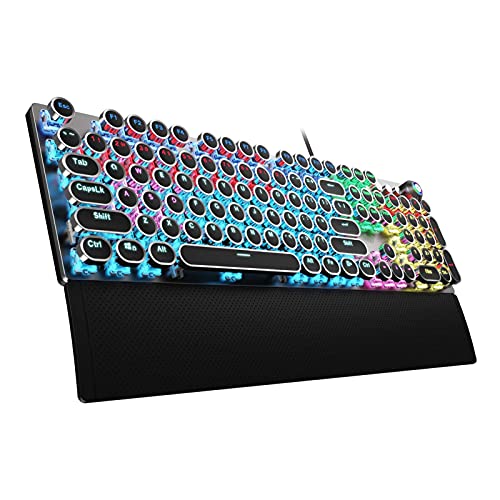
AULA F2088 Typewriter Style Mechanical…
Retro Typewriter Style Round Keycaps: Mechanical blue switch offers a quicker and springier response, crisp click sound, precise tactile feedback for ultimate gaming performance. Double-shot injection molded vintage steampunk round…

RK ROYAL KLUDGE X108 Typewriter…
Retro Typewriter Style with Mechanical Keys: Mechanical blue switches offer medium resistance, audible click sound & tactile feedback, provides responsive and precise gaming environment and performance. Vintage steampunk keyboard round…
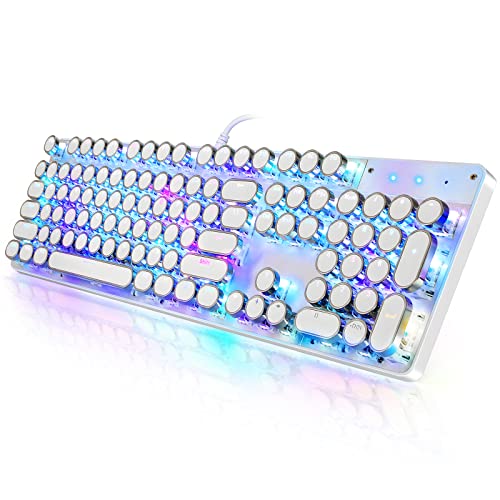
YSCP Typewriter Style Mechanical Gaming…
【Retro Typewriter Style Keyboard】: Merges the charm of vintage typewriters with advanced mechanical blue switches for medium resistance, clear click sounds, and tactile feedback, offering a unique and comfortable typing…
AULA F2088 Typewriter Mechanical Keyboard
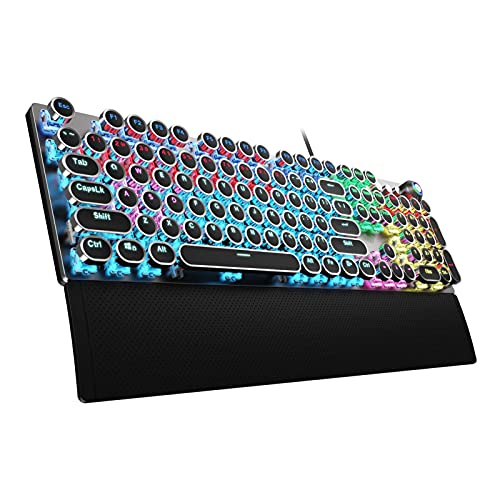
The AULA F2088 brings a classic typewriter look to a modern wired keyboard. Its round keycaps give the board a distinct style, while the full layout offers familiar access to letters, numbers, and function keys. The blue mechanical switches provide a clear click and noticeable feedback with each press. That feel can help writers keep a steady pace when they enjoy an audible typing rhythm.
This keyboard also includes a removable wrist rest, a useful feature during long writing sessions. The media control knob makes volume changes quick, so I do not need to leave a document to adjust sound. Rainbow backlighting adds character to a desk and can help the legends stand out in dim light. Since it uses a wired USB connection, it avoids battery charging and wireless pairing issues.
Pros:
- Clear blue-switch feedback helps confirm each key press
- Full-size layout suits writers who use number keys
- Removable wrist rest adds support during long sessions
- Media knob offers fast and simple volume control
- Round keycaps create a comfortable typewriter-inspired feel
- Wired USB connection provides steady plug-and-play use
- Rainbow backlighting improves visibility in low light
Cons:
- Blue switches can be loud in a shared room
- Wired use limits desk flexibility
- Round keycaps may take time to adjust to
The main strength of the AULA F2088 is its sense of character. It does not look like a plain office keyboard. The rounded keys and retro design can make a writing desk feel more personal and inviting. That matters more than some buyers expect because a keyboard that feels pleasant can make it easier to sit down and begin.
Blue switches are best for people who like a firm click. I find that tactile and sound feedback can reduce the uncertain feeling that sometimes comes from soft laptop keys. Each press feels deliberate, much like tapping an old typewriter. Still, writers who share an office or work near a sleeping family member should consider the noise before buying.
The full-size layout also makes the F2088 practical beyond writing. A number pad helps with spreadsheets, invoices, research notes, and data entry. Dedicated function keys reduce the need for shortcut combinations. The media knob is a small but useful touch, especially for people who listen to music or podcasts while drafting.
The wrist rest is another helpful detail, but writers should still keep their wrists level. A rest should support the palm area rather than force the wrist upward. I also recommend keeping the keyboard close to the body and taking short breaks. A comfortable board helps, but good posture remains important during daily use.
Who Should Buy the AULA F2088?
I recommend the AULA F2088 to writers who want a full-size keyboard with a strong visual style. It suits bloggers, students, journal writers, and home-office users who enjoy a clear click. The removable wrist rest helps during longer sessions, and the knob adds handy control without relying on software.
This is not the best pick for a silent workplace. Its blue switches make a noticeable sound, and the typewriter-style keys may feel unusual at first. For the right user, though, it offers an enjoyable mix of feedback, comfort, and desk appeal. It is a good value when you want the best mechanical keyboard for writers with personality rather than a plain design.
RK ROYAL KLUDGE X108 Typewriter Keyboard

The RK ROYAL KLUDGE X108 gives writers a roomy full-size layout with a retro typewriter design. It has 108 keys, so it includes the number pad and extra controls that many compact keyboards remove. Its blue switches offer a crisp click and a defined actuation feel. The result is a keyboard that feels lively under fast, repeated typing.
A detachable wrist rest supports the lower palms and makes the board easier to fit into different desk setups. The control knob provides quick access to volume and other supported media functions. RGB backlighting and side lighting add a modern touch without removing the vintage look. For writers who want a larger keyboard with a bold appearance, the X108 is a strong contender.
Pros:
- 108-key full-size layout supports writing and office tasks
- Blue switches provide distinct tactile and audible feedback
- Detachable wrist rest allows flexible desk positioning
- Dedicated knob makes media adjustment convenient
- RGB backlighting offers useful low-light visibility
- Retro keycaps give the desk a warm, classic look
- Wired connection keeps setup simple and reliable
Cons:
- Clicky switches may disturb nearby people
- Full-size design takes up substantial desk space
- Lighting features may be more than a writer needs
The X108 stands out for writers who want space. A full-size keyboard gives each hand room to move, and the number pad helps anyone who handles budgets, research figures, or administrative work. I also like that the layout feels familiar. Users moving from a traditional office keyboard do not need to relearn a compact arrangement.
The typewriter style is more than decoration. Round keycaps can change how the fingers contact the board, and some writers enjoy the wider visual separation between keys. That said, keycap shape is personal. If you have used flat laptop keys for years, allow a short adjustment period before judging the board.
The blue switches create a clear sound and feel. This can be useful when drafting because the feedback tells you that the switch registered the press. It may also make typing feel more engaging during long projects. The tradeoff is noise. I would choose a quieter switch for a shared office, library, bedroom, or recording space.
The detachable wrist rest gives the X108 an advantage over many basic full-size boards. I can remove it when I need more mouse space or keep it attached for longer sessions. It will not solve every comfort problem, but it gives users another way to shape the workstation. A straight keyboard position and relaxed shoulders still matter more than any single accessory.
The knob is one of the most useful controls on the board. A quick turn can change volume without interrupting a writing flow. This is helpful when I move between music, spoken notes, and quiet work. The RGB and side lighting are less important for typing, but they can improve the mood of a desk and help the keyboard remain visible at night.
Who Should Buy the RK ROYAL KLUDGE X108?
The X108 is best for writers who need a full-size board and enjoy retro styling. It suits novelists, content creators, students, and home-office users who also work with numbers. The large layout, detachable wrist rest, knob, and blue-switch response make it a balanced choice for typing and general computer work.
I would not choose it for a minimalist desk or a very quiet room. Its footprint is large, and the clicky switches are not subtle. For buyers who want a dramatic typewriter-inspired look with modern lighting, the X108 may be the best mechanical keyboard for writers in this group. Its value is strongest when you will use the number pad and media controls often.
YSCP Typewriter Style Mechanical Keyboard
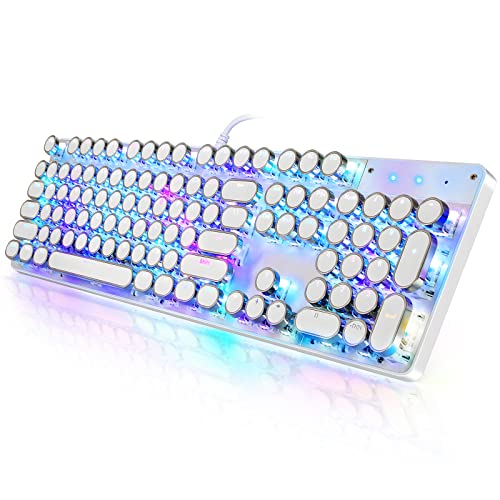
The YSCP typewriter-style keyboard offers a clean retro design with a white finish and round keycaps. Its 104-key layout keeps the familiar full-size arrangement that many writers prefer. Blue switches deliver a clicky response, which can make each letter feel clear and intentional. The board also includes RGB backlighting for a more modern desk setup.
This keyboard focuses on the core typing experience. It does not try to replace a writing tool with a long list of advanced features. The wired connection keeps setup easy, while the classic key shape gives the board a distinct feel. It can work well for people who want a decorative keyboard that still handles everyday documents, email, and schoolwork.
Pros:
- Full-size 104-key layout feels familiar to most users
- White retro design brightens a writing desk
- Blue switches give clear press feedback
- RGB backlighting supports typing in dim rooms
- Wired setup avoids charging and pairing steps
- Round keycaps create a classic typewriter appearance
- Useful for writing, schoolwork, email, and office tasks
Cons:
- Blue switches produce noticeable typing noise
- It may lack the extra controls found on some models
- White surfaces can show dust and marks more easily
The YSCP is a good match for a writer who values appearance and simplicity. Its white finish has a bright, calm look that can make a small desk feel more open. The round keys create a strong visual link to vintage typewriters without giving up the speed of a modern mechanical board.
Its 104-key layout is easy to understand. Writers can use the number row, navigation keys, arrows, and number pad without changing their habits. This matters when work involves more than prose. I often find a full-size keyboard more practical for invoices, research, forms, and basic spreadsheet work.
The blue switches give a firm click that many users enjoy. They can make fast typing feel more controlled because the finger receives both sound and touch feedback. However, the sound can become tiring for people who prefer a calm, quiet desk. It is wise to consider the room and the people around you before selecting clicky switches.
RGB backlighting adds flexibility for evening work. It may not improve writing speed, but it can make the keys easier to find when overhead lights are low. The lighting also gives the simple white board a playful modern edge. Users who want a plain, light-colored keyboard can keep the effect subtle, depending on the available lighting settings.
The YSCP does not appear aimed at buyers who need advanced wireless modes, custom macros, or a compact travel form. Its appeal is more direct. It provides a full-size wired mechanical typing surface with a memorable design. That focus can be a benefit because fewer features mean fewer settings to learn.
Who Should Buy the YSCP?
The YSCP is best for writers who want a bright retro keyboard at a practical price. It suits students, journal keepers, home users, and creative workers who prefer a classic look. The full layout works well for daily documents, while the clicky switches satisfy people who enjoy audible feedback.
I would skip this model if you need quiet operation, wireless freedom, or a small keyboard for a narrow desk. I would also keep a soft cloth nearby if the white finish must stay spotless. For buyers who want simple full-size performance and a typewriter-inspired design, this can be the best mechanical keyboard for writers on a budget.
What Makes a Mechanical Keyboard Good for Writers?
Writers need more than colorful lights or a stylish case. The best mechanical keyboard for writers should support steady typing for hours. It should make key presses easy to understand without forcing the fingers to work too hard. It should also match the writer’s room, desk, and daily habits.
Mechanical keyboards use individual switches beneath the keycaps. Each switch controls one key and gives a particular feel. Some switches feel smooth and quiet. Others feel tactile, with a small bump. Blue switches add a click and a stronger sound. None is perfect for every writer, so personal preference matters.
Switch weight is important. A heavy switch may feel solid, but it can tire the fingers during a long manuscript. A light switch may support quick typing, but some users may press keys by mistake. Medium switches often offer a useful middle ground. I suggest choosing feedback based on control, comfort, and noise rather than marketing terms alone.
Key rollover and dependable registration also matter. A keyboard with good rollover can recognize several keys pressed close together. This is useful for shortcuts, editing commands, and fast typing. Most modern mechanical keyboards handle normal writing well, but quality control still affects the experience.
Clicky, Tactile, or Linear Switches?
Clicky switches are easy to understand. They offer a bump and a sharp sound. Many writers enjoy them because the rhythm feels close to a typewriter. The three keyboards in this review use blue switches, so they target people who want that clear response.
Tactile switches provide a bump without the loud click. They are often a better choice for shared spaces. They can still give useful feedback while reducing noise. If you write beside a partner, coworker, or sleeping child, tactile switches may be kinder to everyone nearby.
Linear switches move smoothly from top to bottom. They make less switch noise and can feel fast. Some writers enjoy their clean motion, while others miss the bump that confirms a press. Linear switches may also create sound when the key hits the case, so they are not always silent.
Blue switches can be excellent for writers, but the room decides whether they work. A private office may welcome the sound. A shared workspace may not. I always treat noise as a practical buying factor, not a small detail.
Full-Size Versus Compact Keyboards for Writing
A full-size board includes a number pad. It also has a dedicated function row, arrow keys, and navigation keys. Writers who work with numbers or office forms may find this layout more efficient. All three keyboards reviewed here use a full-size design.
The drawback is desk space. A full-size keyboard can push the mouse farther away. It may also leave less room for a notebook, tablet, or coffee cup. A compact tenkeyless board removes the number pad and creates more mouse space. A smaller board can also travel more easily.
For pure writing, a compact layout may be enough. For writing plus office work, a full-size keyboard is often more useful. I prefer a full-size model when I regularly enter numbers, edit documents, and manage files. The right size depends on what happens between writing sessions.
Why Keycap Shape Matters
Keycaps affect more than style. Their height, shape, and spacing change how the fingers move. Round typewriter-style caps can make each key look separate and easy to identify. They also create a different finger feel than flat laptop keys.
Some users adjust within a few hours. Others need several days. Early mistakes do not always mean a keyboard is poor. They may simply show that the hands are learning a new shape. I suggest giving a new keycap design a fair trial before returning it.
Keycap material also affects long-term use. Common plastic types include ABS and PBT. ABS can develop a smooth shine over time. PBT usually resists shine better, though the exact result depends on thickness and finish. Product listings may not always provide full keycap details, so buyers should avoid assuming that every retro keycap uses the same material.
Comfort Features That Help During Long Writing Sessions
A wrist rest can reduce pressure when it supports the palms in a relaxed position. It should not force the wrists into a steep angle. Removable rests are useful because they let each user choose the setup that feels right.
Desk height matters too. Keep the keyboard near elbow level when possible. Let the shoulders drop. Keep the wrists straight instead of bending them sharply toward the little fingers. I also recommend short breaks every 30 to 60 minutes. Stand, look away from the screen, and move the hands.
Key spacing can affect comfort. Crowded keys may cause more errors. A roomy full-size board can feel calm and familiar. The tradeoff is a larger footprint. Writers should measure the desk before buying, especially when using a laptop, monitor stand, or large mouse pad.
Wired Versus Wireless for Writers
All three reviewed keyboards use a wired USB connection. Wired models offer a simple setup. Plug the cable into the computer, and the keyboard is ready in most cases. There is no battery to charge and no wireless connection to troubleshoot.
Wireless keyboards provide a cleaner desk and easier movement. They can work well for writers who switch between a desktop, tablet, and laptop. However, wireless models need charging or battery replacement. Some may also require a receiver or Bluetooth pairing.
For a fixed writing desk, wired use is not a major problem. In fact, it can feel reassuring during a long project. A cable may be less convenient, but it removes one more task from the workday. I would choose wired for value and reliability, then wireless for mobility.
Backlighting and Media Controls
Backlighting is useful when a writer works in a dim room. It can help the key legends remain visible and add a pleasant glow. Still, lighting should not outweigh switch comfort or layout. A keyboard with beautiful lights can remain unpleasant if its keys cause fatigue.
RGB lighting gives users color choices and effects. Rainbow lighting provides a fixed colorful appearance. Both can suit a creative desk. Writers who prefer a calm space may use a low brightness setting or turn the lighting off.
A media knob is a practical extra. It lets users change volume with one hand. This helps when listening to music, podcasts, or recorded interviews. The AULA F2088 and RK X108 include a knob, while the YSCP focuses more on a simple design.
How I Evaluate the Best Mechanical Keyboard for Writers
I start with the typing feel. A writer may press a key thousands of times in one day, so the switch response must feel predictable. I look for a clear actuation point, stable keys, and a layout that does not create needless errors.
Next, I consider long-session comfort. Wrist support, key height, desk size, and switch weight all matter. I also think about noise because a keyboard can affect other people in the home or office. A great board for a private room may be a poor choice for a shared workplace.
Build quality is another key point. A sturdy case should stay stable while the writer types. Keys should not feel loose or uneven. Wired connectivity should remain dependable. These details do not always appear in a product photo, so I pay close attention to buyer feedback, specifications, and common use cases.
Finally, I compare value. A writer does not need to pay for features that will never be used. A full-size board, blue switches, and a wrist rest may be worth more than advanced gaming functions. The best mechanical keyboard for writers is the model that supports the work most naturally.
Best Uses for These Typewriter-Style Keyboards
These boards work well for long-form writing. Novelists can use the full layout to draft chapters without changing their habits. Bloggers can move between writing, research, and basic content management. Students can use the number pad for assignments, forms, and data work.
They also suit home offices. Their retro appearance can make a desk feel less cold than a basic black office keyboard. The lighting helps in the evening, while the mechanical switches give a stronger response than many low-cost membrane boards.
They may not suit every professional setting. A quiet newsroom, shared library, or open office may require a softer switch. They are also not ideal for people who need a very small travel keyboard. Their full-size shape and wired cables work best in a stable desk setup.
Care and Maintenance Tips
Dust can collect between mechanical keycaps. I suggest turning off or unplugging the keyboard before cleaning. Use a soft brush or compressed air with care. Avoid spraying liquid directly onto the board.
A keycap puller can make deeper cleaning easier. Remove only a few keys at a time if you are unsure where they belong. Take a photo first. Wipe the keycaps with a slightly damp cloth, then let them dry fully before reinstalling them.
Keep drinks away from the keyboard. Mechanical switches can last a long time, but liquid can damage the circuit board. Also avoid pulling the cable at an angle. Small habits like these help protect a writing tool that may serve you for years.
My Recommendation
For most writers who want a full-size retro board, I recommend the RK ROYAL KLUDGE X108. It combines a familiar 108-key layout, clicky blue switches, a detachable wrist rest, RGB lighting, and a useful control knob. It is best for novelists, students, and home-office users who have enough desk space and do not need quiet switches.
The AULA F2088 is my pick for writers who want a strong typewriter feel with a removable wrist rest and media knob. Its layout and feature set make it practical, while its design adds character. Choose it when you want a lively typing sound and a keyboard that feels like part of the room.
The YSCP is best for buyers who want a bright white retro style and a direct typing setup. It keeps the familiar 104-key format and adds RGB backlighting without focusing on extra controls. It is a good fit for students, journal writers, and budget-minded home users.
In short, the best mechanical keyboard for writers depends on noise, space, and typing taste. Blue switches suit writers who like a click. A full-size layout suits people who use number keys. A wrist rest helps with comfort, but it cannot replace good posture and regular breaks.
| Best for | Why |
|---|---|
| Best overall full-size choice | RK ROYAL KLUDGE X108 offers 108 keys, a wrist rest, RGB lighting, and a control knob. |
| Best retro typing experience | AULA F2088 combines round keycaps, blue-switch feedback, and a classic typewriter look. |
| Best simple white design | YSCP provides a bright 104-key layout, blue switches, and RGB backlighting at a practical price. |
FAQs Of Best Mechanical Keyboard for Writers
Are blue switches good for writing?
Blue switches can be good for writers who enjoy a clear bump and click. They make each key press easy to feel. However, they are loud, so they may not suit shared rooms or quiet offices.
Is a full-size keyboard better for writers?
A full-size keyboard is useful if you use the number pad, navigation keys, or function row. It also feels familiar to many office users. A compact keyboard may be better if desk space or portability matters more.
Can a mechanical keyboard reduce typing fatigue?
It may help when the switch feel, key height, and layout suit your hands. A mechanical keyboard does not guarantee comfort. Good posture, correct desk height, and regular breaks remain essential.
Are typewriter-style keycaps hard to learn?
They may require a short adjustment period if you normally use flat laptop keys. Most users can adapt with regular practice. The round shape can feel pleasant once your fingers learn the spacing.
Do writers need RGB backlighting?
No. RGB is an extra feature, not a writing requirement. It can help visibility in low light and add style, but switch comfort and layout should come first.
Final Verdict: Which Should You Buy?
The RK ROYAL KLUDGE X108 is the strongest all-around pick for most writers. It offers a full layout, clicky feedback, a wrist rest, lighting, and a useful knob. Choose the AULA for a classic feel or the YSCP for a simple white retro design.
The best mechanical keyboard for writers should make every session feel steady and comfortable. Match the switch noise, keyboard size, and features to your room and habits for the best long-term value.

I’m James Terban, a teacher with a degree in Education and five years of experience working with students of all ages, from young kids learning their first grammar rules to adults picking up English as a second language. I started Linguistics Guide because I kept seeing good learners hit a wall due to explanations that were either too vague or too complicated. Every article here comes from a real question I have heard in a classroom or seen asked online.